Let’s understand the science behind it.
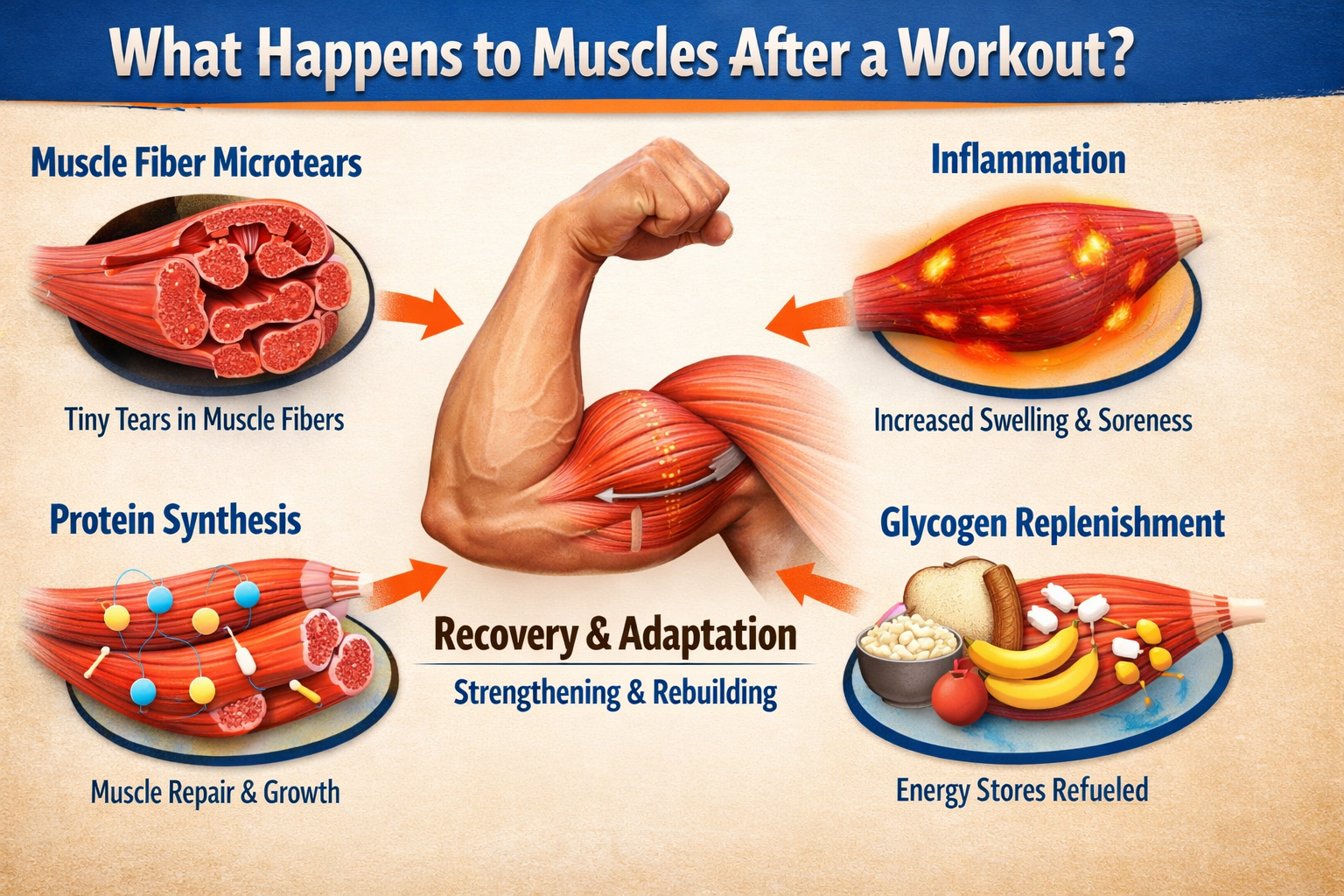
1. Muscle Fibre Damage (Micro tears)
During exercise—especially strength training—your muscle fibers experience tiny tears called microtrauma.
Why it happens:
• Lifting weights
• Sprinting
• Intense or unfamiliar movements
This damage is good how? – It signals your body to rebuild stronger muscle tissue.
- Inflammation Response
Your immune system reacts to the damage:
- Blood flow increases
- White blood cells rush in
- Swelling may occur
This causes muscle soreness (DOMS):
Delayed Onset Muscle Soreness (12–48 hours after workout)
- Muscle Repair & Growth (Hypertrophy)
Your body starts repairing:
- Satellite cells fuse with damaged fibers.
- Proteins rebuild muscle tissue
- Fibres become thicker and stronger
This is called muscle hypertrophy
Muscles grow during rest, not during the workout.
- Glycogen Replenishment
Your muscles used stored glycogen (carbs) for energy.
- Glycogen stores refill
- Needs carbohydrates
- Water binds to glycogen (muscles look fuller)
- Hormonal Response
Workouts trigger hormones:
Hormone | Function |
Testosterone | Muscle growth |
Growth Hormone | Repair |
Cortisol | Stress (too much = muscle breakdown) |
Balanced training keeps hormones optimal.
- Adaptation Phase
Your body adapts to handle future stress:
- Stronger muscles
- Improved endurance
- Better coordination
How to Maximize Muscle Recovery
 Suitable amino acids and protein supplements
Sleep 7–9 hours
Stay hydrated
Active recovery (stretching, walking)
Rest days
Summary
After a workout, your muscles:
- Get tiny tears
- Become inflamed
- Repair & grow stronger
- Refill energy stores
- Adapt to stress
Pain today = strength tomorrow (if you recover properly)