Exercise is an important part of a healthy lifestyle. Activities like walking, running, cycling, yoga, gym workouts, or sports help improve stamina, strength, and overall wellbeing. But while focusing on workout routines, many people ignore one very important factor — hydration.
During exercise, the body loses water through sweat. If this fluid loss is not replaced, dehydration can occur. Even mild dehydration can reduce energy levels, affect performance, and make exercise feel more difficult. In some cases, dehydration can cause dizziness, muscle cramps, weakness, or headaches.
Understanding the signs of dehydration during exercise helps you take timely action and maintain a safe fitness routine. This article explains common symptoms, causes, prevention tips, hydration strategies, and the role of nutrition in maintaining proper fluid balance.
Why Hydration is Important During Exercise
Water is essential for almost every function in the body. It helps regulate body temperature, transport nutrients, and support muscle activity.
During exercise:
- Body temperature increases
- Sweat production increases
- Fluids and electrolytes are lost
- Heart rate may increase
If fluids are not replaced, the body may struggle to perform efficiently.
Proper hydration helps:
- Maintain energy levels
- Improve endurance
- Prevent muscle cramps
- Support concentration
- Improve recovery after exercise
Even small fluid loss can impact workout performance.
What Causes Dehydration During Exercise?
Dehydration happens when the body loses more fluids than it receives.
Common Causes
1. Excessive Sweating
Intense exercise or hot weather increases sweating, leading to higher fluid loss.
2. Not Drinking Enough Water
Some people forget to drink water regularly or depend only on thirst.
3. Long Workout Duration
Long exercise sessions increase risk of dehydration.
4. High Temperature and Humidity
Hot and humid weather causes more sweating.
5. Loss of Electrolytes
Sweat contains minerals like sodium and potassium, which are important for muscle function.
Understanding these causes helps prevent dehydration.
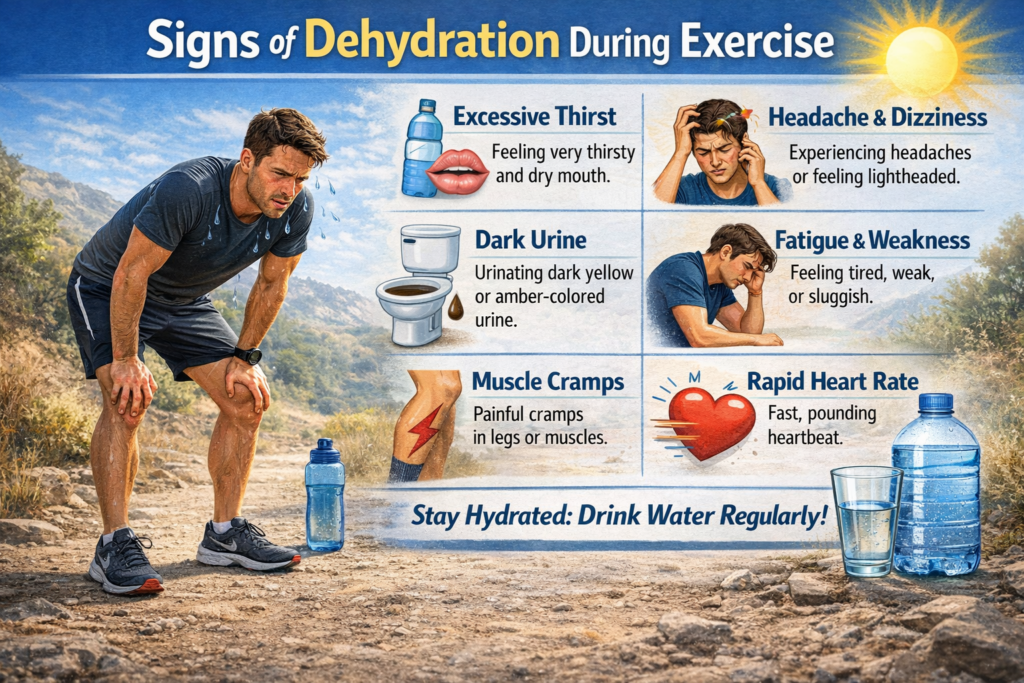
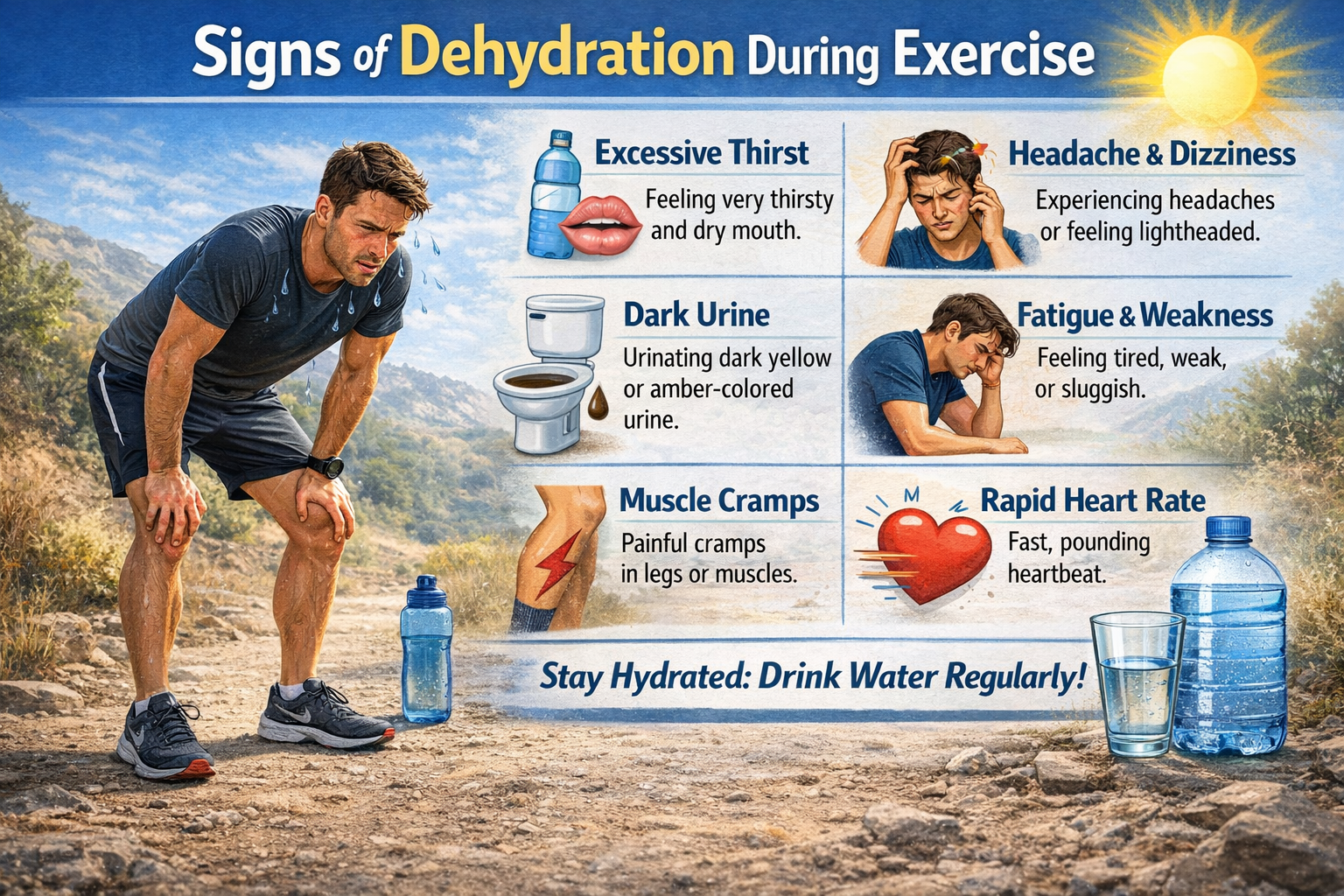
Signs of Dehydration During Exercise
Recognizing symptoms early helps prevent discomfort and health risks.
Early Signs of Dehydration
- Feeling thirsty
- Dry lips or mouth
- Feeling slightly tired
- Mild headache
- Warm skin
- Reduced energy levels
Moderate Signs
- Dizziness
- Muscle cramps
- Increased fatigue
- Reduced focus
- Dark yellow urine
- Feeling weak
Severe Signs
- Extreme thirst
- Confusion
- Nausea
- Rapid heartbeat
- Very low energy
- Difficulty continuing exercise
If severe symptoms appear, exercise should be stopped and fluids should be consumed immediately.
How Dehydration Affects Exercise Performance
Dehydration reduces the body’s ability to perform physical activity efficiently.
|
Effect |
Impact |
|
Low energy |
Feeling tired quickly |
|
Muscle cramps |
Discomfort during exercise |
|
Increased heart rate |
Faster fatigue |
|
Reduced concentration |
Poor coordination |
|
Increased body heat |
Feeling overheated |
|
Reduced endurance |
Lower performance |
Maintaining fluid balance supports better stamina and comfort.
How Much Water Should You Drink During Exercise?
Water requirements vary depending on exercise intensity and weather conditions.
General Hydration Guideline
|
Time |
Water Intake |
|
Before exercise |
1–2 glasses of water |
|
During exercise |
Small sips every 15–20 minutes |
|
After exercise |
1–2 glasses of water |
|
Long workouts |
Include electrolyte fluids |
Avoid drinking large amount of water at once. Small frequent intake works better.
Practical Hydration Routine for Workouts
Simple habits can help maintain hydration levels.
Before Exercise
- Drink water 20–30 minutes before workout
- Avoid starting exercise when very thirsty
During Exercise
- Take small sips regularly
- Increase fluid intake in hot weather
After Exercise
- Drink water to replace fluid loss
- Include hydrating foods
Regular hydration improves workout comfort.
Role of Nutrition in Preventing Dehydration
Balanced nutrition helps maintain fluid and electrolyte balance.
Certain foods naturally contain water and minerals.
Examples of hydrating foods:
- Coconut water
- Watermelon
- Orange
- Cucumber
- Yogurt
- Buttermilk
Including these foods helps support hydration.
Pre-Workout Hydration and Nutrition Support
Eating balanced food before exercise helps maintain energy and hydration levels.
Examples:
- Banana
- Oats
- Yogurt
- Fruit smoothie
- Whole grain toast
Some individuals include a pre-workout supplement as supportive option to maintain energy and electrolyte balance before exercise. Supplements should support balanced diet.
Proper hydration before activity helps reduce fatigue.
Post-Workout Recovery and Rehydration
After exercise, body needs fluids to recover.
Examples of recovery hydration:
- Water
- Coconut water
- Lemon water
- Milk or plant protein drink
- Fresh fruits
Some individuals include a post-workout supplement as supportive option for recovery, depending on nutritional requirements.
Rehydration supports muscle recovery and reduces tiredness.
Hydrated vs Dehydrated Body During Exercise
|
Factor |
Hydrated Body |
Dehydrated Body |
|
Energy |
Stable |
Low |
|
Muscle function |
Smooth movement |
Cramps possible |
|
Body temperature |
Controlled |
Increased heat |
|
Focus |
Good concentration |
Reduced focus |
|
Endurance |
Better stamina |
Early fatigue |
Maintaining hydration helps improve workout experience.
Tips to Prevent Dehydration During Exercise
Simple preventive steps help maintain fluid balance.
- Drink water regularly throughout the day
- Carry water bottle during workout
- Do not wait until feeling very thirsty
- Increase fluid intake in hot weather
- Include hydrating foods in diet
- Avoid very long workout without breaks
- Wear comfortable clothing
- Maintain balanced nutrition
Small habits help maintain consistency.
Situations Where Hydration is Very Important
Special attention is needed when:
- Exercising in hot weather
- Doing high-intensity workouts
- Cycling or running for long duration
- Participating in sports activities
- Having busy schedule with less water intake
Planning hydration in advance helps avoid discomfort.
Additional Tips for Better Workout Results
These habits support overall fitness routine.
- Maintain regular exercise schedule
- Eat balanced meals
- Take proper rest
- Stay consistent
- Monitor body signals
- Maintain healthy lifestyle habits
Small improvements lead to better long-term results.
Conclusion
Hydration is an essential part of any fitness routine. Ignoring fluid intake during exercise may lead to fatigue, dizziness, muscle cramps, and reduced performance. Recognizing early signs of dehydration helps prevent health issues and supports safe physical activity.
Drinking water regularly, eating hydrating foods, and maintaining balanced nutrition can improve energy levels and recovery. Small consistent habits help maintain proper hydration and support overall wellbeing.
Staying hydrated allows you to exercise comfortably, perform better, and maintain a healthy lifestyle.