Cycling is one of the easiest and most enjoyable ways to stay active. It does not require complicated skills, expensive equipment, or intense training in the beginning. Many people choose cycling to improve fitness, manage weight, reduce stress, or simply enjoy some fresh air.
However, beginners often feel confused about how to start cycling properly. Questions like How far should I ride?, How fast should I go?, What should I eat before cycling?, or How to avoid leg pain? are very common. Some people also stop cycling after a few days because they feel tired or uncomfortable.
The truth is, cycling becomes easy when you follow a simple plan. With the right posture, gradual progress, proper nutrition, and consistency, anyone can develop a healthy cycling habit.
This beginner-friendly guide explains practical cycling tips, common mistakes to avoid, simple weekly plans, and nutrition support that can help you stay energetic and motivated.
Why Cycling is a Good Exercise for Beginners
Cycling is a low-impact activity, which means it is gentle on joints compared to running or jumping exercises. It is suitable for people of different age groups and fitness levels.
Key Benefits of Cycling
- Improves heart health
- Helps manage body weight
- Strengthens leg muscles
- Improves stamina gradually
- Reduces stress and mental fatigue
- Supports better sleep
- Easy to include in daily routine
- Cycling can be done outdoors, in a park, on roads, or indoors using a stationary bike.
Common Problems Faced by Beginner Cyclists
Many beginners face small challenges in the first few weeks. These are normal and improve with practice.
1. Low Stamina
New cyclists often feel tired quickly because the body is not used to continuous movement.
2. Leg Muscle Soreness
Muscles take time to adjust to cycling motion. Mild soreness is common in the beginning.
3. Confusion About Distance and Speed
Beginners are often unsure about how much cycling is enough or what speed is comfortable.
4. Incorrect Cycle Adjustment
Improper seat height or handle position may cause knee or back discomfort.
5. Irregular Routine
Stopping and restarting frequently makes progress slow.
Understanding these problems helps beginners stay patient and consistent.
How Cycling Helps Improve Overall Fitness
Cycling supports both physical and mental health. Even short daily rides can create positive changes.
Physical Benefits
- Improves blood circulation
- Builds strength in legs and lower body
- Supports fat management
- Improves joint mobility
- Enhances stamina
Mental Benefits
- Helps reduce stress
- Improves focus and concentration
- Boosts confidence
- Helps relax mind
- Encourages positive mood
- Regular cycling can become a healthy habit that supports long-term wellness.
Scientific and Practical Benefits of Regular Cycling
Research shows that moderate physical activity like cycling supports heart health and improves endurance.
Benefit | How It Helps |
Improved cardiovascular health | Supports heart function |
Increased stamina | Helps perform daily activities easily |
Better muscle strength | Improves balance and posture |
Stress reduction | Helps improve mental wellness |
Weight management support | Helps maintain healthy lifestyle |
Improved energy levels | Helps stay active throughout the day |
Consistency is more important than intensity for beginners.
Step-by-Step Beginner Tips for Cyclists
Following simple steps helps make cycling comfortable and enjoyable.
1. Choose a Comfortable Bicycle
Select a cycle suitable for your height and riding style. Comfort is more important than design.
Beginner-friendly options:
Hybrid cycle
Mountain bike
Stationary bike
A comfortable cycle encourages regular use.
2. Adjust Seat Height Properly
Correct seat height prevents knee strain and improves efficiency.
Basic guideline:
When pedal is at lowest position, your knee should be slightly bent, not fully straight.
Proper adjustment improves comfort during longer rides.
3. Start Slowly and Progress Gradually
Avoid long rides in the beginning. Start small and increase slowly.
Example progression:
Week 1: 10–15 minutes
Week 2: 15–20 minutes
Week 3: 20–30 minutes
Gradual increase helps prevent fatigue.
4. Maintain Correct Posture
Proper posture reduces strain on back and shoulders.
Simple posture tips:
Keep back relaxed but straight
Avoid leaning too forward
Keep shoulders relaxed
Hold handle gently
Comfortable posture improves performance.
5. Warm-Up Before Cycling
Warm-up prepares muscles for activity.
Simple warm-up ideas:
Light stretching
Slow walking
Gentle leg movement
Warm-up helps reduce stiffness and injury risk.
Weekly Cycling Plan for Beginners
A structured plan helps maintain consistency without overexertion.
Day | Activity |
Monday | 15 minutes easy cycling |
Tuesday | 20 minutes moderate cycling |
Wednesday | Rest or stretching |
Thursday | 20–25 minutes cycling |
Friday | Easy pace cycling |
Saturday | 30 minutes relaxed ride |
Sunday | Rest |
This schedule allows body recovery while improving stamina.
Indoor vs Outdoor Cycling Comparison
Both indoor and outdoor cycling offer benefits. Choose based on comfort and convenience.
Factor | Indoor Cycling | Outdoor Cycling |
Weather effect | Not affected | Depends on weather |
Safety | Controlled environment | Requires road awareness |
Motivation | Requires discipline | Natural scenery motivates |
Convenience | Flexible timing | Travel required |
Variety | Limited | More engaging |
Many beginners prefer indoor cycling initially.
Role of Nutrition in Cycling Performance
Nutrition plays an important role in maintaining energy levels and supporting recovery.
Balanced meals help reduce fatigue and improve consistency in cycling routine.
Pre-Cycling Nutrition Support
Eating light food before cycling provides energy.
Examples:
- Banana
- Oats
- Whole grain toast
- Yogurt
- Fruit smoothie
Some individuals choose to include a pre-workout supplement as supportive nutrition to maintain energy and focus before cycling sessions. Supplements should complement a balanced diet.
Post-Cycling Recovery Nutrition
After cycling, the body needs nutrients for muscle repair and recovery.
Examples:
- Milk or plant-based protein drink
- Sprouts salad
- Dal and rice
- Paneer or tofu
- Nuts and seeds
Some individuals include a post-workout supplement as supportive option for recovery, depending on dietary needs.
Balanced home-cooked meals remain the foundation of good health.
Safety Tips for Beginner Cyclists
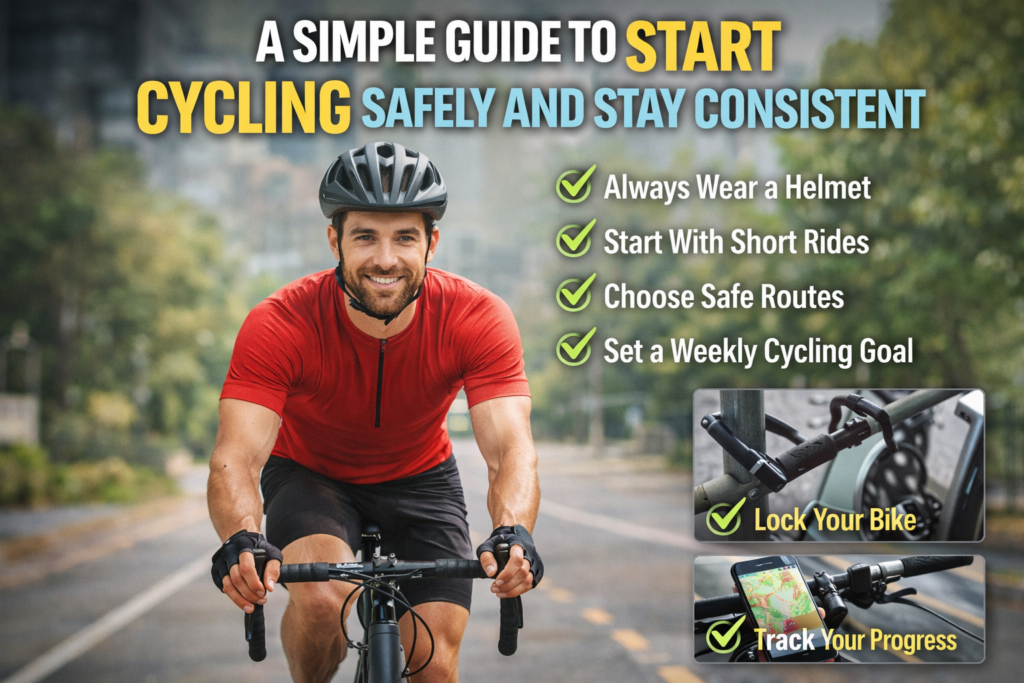
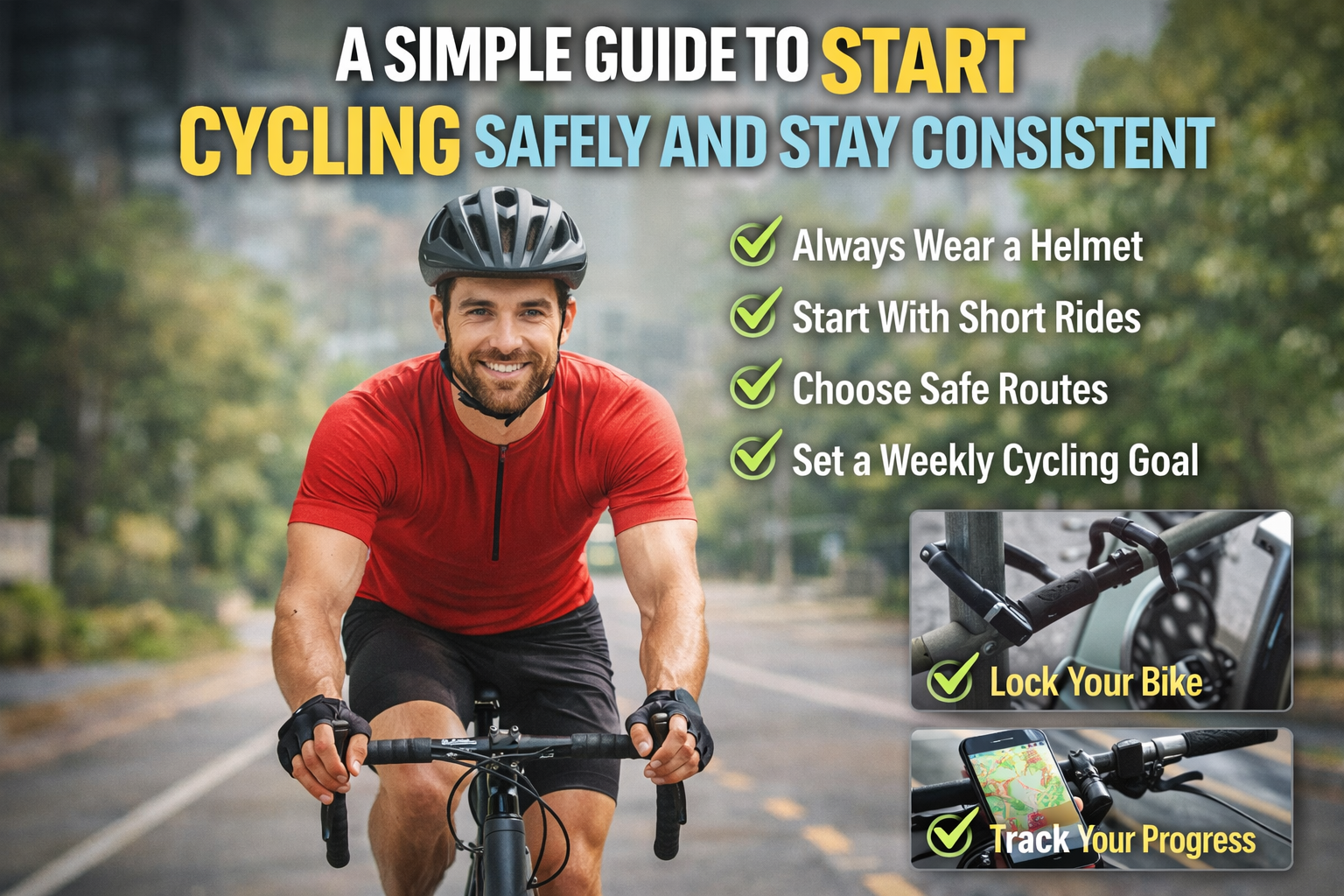
- Safety habits improve confidence and prevent injury.
- Wear comfortable clothing
- Use helmet for outdoor cycling
- Check brakes before riding
- Avoid very rough roads initially
- Stay hydrated
- Avoid very high speed in beginning
- Ride in safe surroundings
- Safe cycling encourages consistency.
Common Mistakes Beginners Should Avoid
- Avoiding small mistakes can improve results.
- Starting with very long rides
- Ignoring posture
- Skipping warm-up
- Cycling without hydration
- Overtraining
- Expecting quick results
- Not taking rest days
- Small improvements lead to better performance.
Additional Tips for Better Cycling Results
These simple habits support long-term progress.
- Fix a daily cycling time
- Track weekly progress
- Stretch after cycling
- Maintain proper sleep routine
- Keep realistic goals
- Stay consistent
- Regular practice builds stamina and confidence.
Conclusion
Cycling is one of the simplest and most effective ways to begin a healthy lifestyle. It is easy to start, flexible, and suitable for beginners. With proper posture, gradual progression, balanced nutrition, and regular practice, cycling can become an enjoyable part of daily routine.
Do not worry about speed or distance in the beginning. Focus on building a habit and staying consistent. Over time, stamina improves naturally, and cycling becomes easier.
Small daily efforts can create long-term health benefits and support overall wellbeing.