
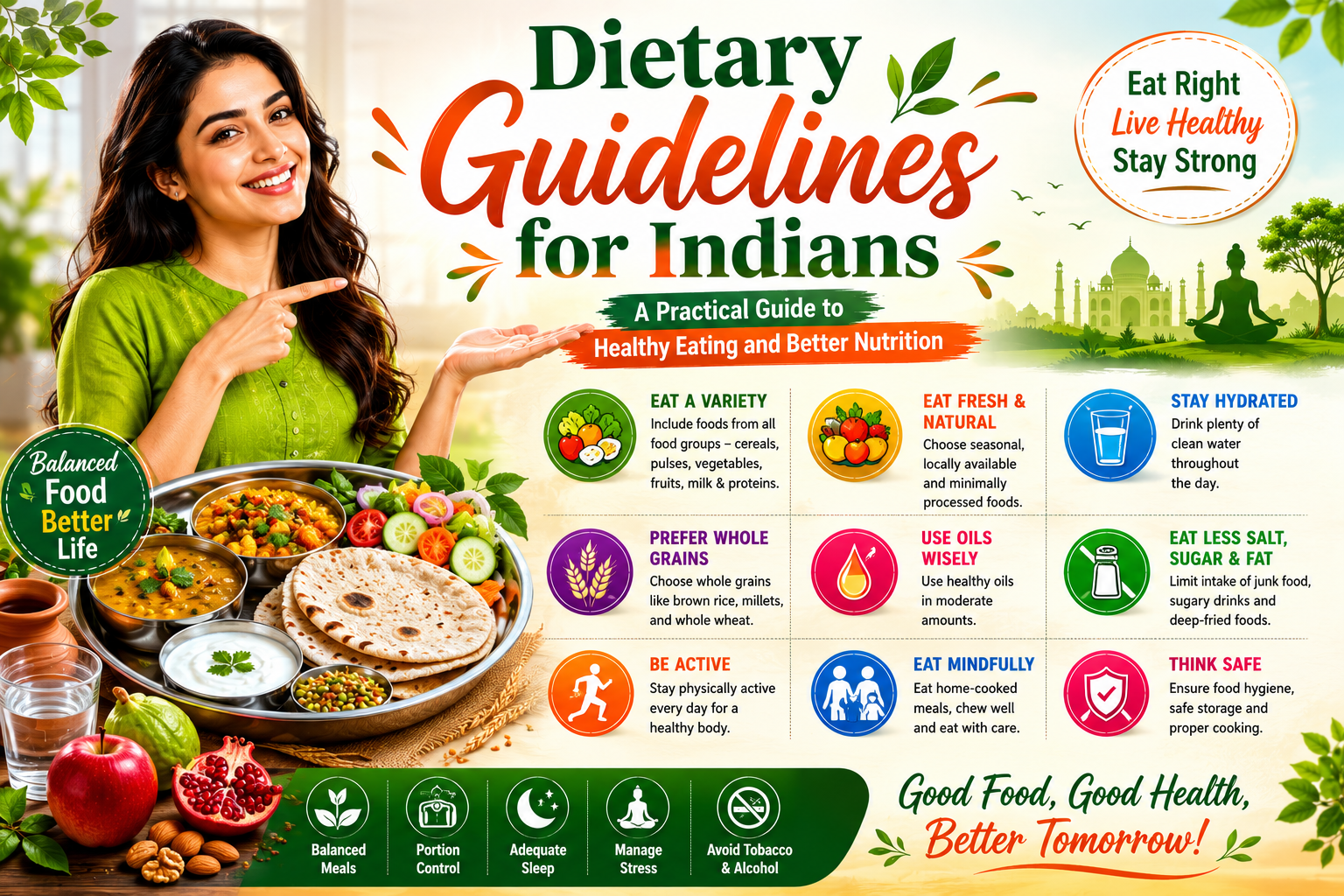
In today’s fast-paced world, maintaining a healthy diet has become more challenging than ever. Busy work schedules, frequent consumption of processed foods, irregular meal timings, and sedentary lifestyles have significantly changed eating habits across India. As a result, health concerns such as obesity, diabetes, hypertension, heart disease, and nutritional deficiencies are becoming increasingly common.
The good news is that healthy eating does not require complicated diets or expensive superfoods. Following simple and balanced dietary guidelines can help improve overall health, maintain energy levels, support immunity, and reduce the risk of lifestyle-related diseases.
Indian cuisine is naturally rich in diverse foods, including grains, pulses, vegetables, fruits, dairy products, nuts, and spices. When consumed in the right balance, these foods provide most of the nutrients the body needs for optimal health.
This guide explains the essential dietary guidelines for Indians, practical meal planning tips, the importance of nutrition, and how healthy eating can support an active lifestyle.
Why Following Dietary Guidelines Is Important
Food is more than just a source of calories. It provides nutrients that support every function in the body, including energy production, immunity, growth, recovery, and overall wellbeing.
A balanced diet helps:
- Maintain healthy body weight
- Support heart health
- Improve digestion
- Enhance immunity
- Maintain muscle strength
- Support mental wellbeing
- Reduce the risk of chronic diseases
Following healthy dietary habits consistently can have a significant impact on long-term health.
Common Nutrition Challenges in India
Despite having access to a variety of foods, many people face nutritional imbalances.
Excess Consumption of Processed Foods
Packaged snacks, sugary beverages, and fast food often contain excess calories, unhealthy fats, sugar, and sodium.
Low Fruit and Vegetable Intake
Many individuals do not consume enough fruits and vegetables daily, leading to nutrient deficiencies.
Irregular Meal Timings
Skipping meals or eating at inconsistent times can affect metabolism and energy levels.
Excess Sugar Consumption
Frequent intake of sweets, desserts, and sugary drinks may contribute to weight gain and metabolic issues.
Lack of Physical Activity
Poor dietary habits combined with sedentary lifestyles increase health risks.
Understanding these challenges is the first step toward making healthier choices.
Key Principles of Dietary Guidelines for Indians
Healthy eating is about balance, variety, and moderation.
Eat a Variety of Foods
No single food provides all essential nutrients.
Include foods from different groups:
- Whole grains
- Pulses and legumes
- Fruits
- Vegetables
- Dairy products
- Nuts and seeds
- Healthy fats
Variety helps ensure adequate nutrient intake.
Make Fruits and Vegetables a Daily Habit
Fruits and vegetables provide:
- Vitamins
- Minerals
- Antioxidants
- Dietary fiber
Aim to include colorful vegetables and seasonal fruits every day.
Examples include:
- Spinach
- Carrots
- Tomatoes
- Cucumber
- Guava
- Papaya
- Orange
- Apple
Greater variety generally means better nutrient diversity.
Choose Whole Grains More Often
Whole grains provide complex carbohydrates and fiber that help maintain energy levels.
Healthy options include:
- Whole wheat
- Brown rice
- Millets
- Oats
- Jowar
- Bajra
- Ragi
Compared to refined grains, whole grains provide more nutrients and better satiety.
Include Protein in Every Meal
Protein is essential for:
- Muscle maintenance
- Recovery
- Growth
- Immunity
Good protein sources include:
Vegetarian Sources
- Dal
- Rajma
- Chana
- Soy products
- Paneer
- Curd
Non-Vegetarian Sources
- Eggs
- Fish
- Chicken
- Lean meat
Including protein at every meal helps maintain fullness and supports overall health.
Practical Benefits of Following Healthy Dietary Guidelines
Healthy eating offers benefits beyond weight management.
Benefit | How It Helps |
Stable Energy Levels | Reduces tiredness throughout the day |
Better Digestion | Supports gut health |
Improved Immunity | Helps protect against illness |
Healthy Weight Management | Supports balanced calorie intake |
Better Recovery | Helps repair muscles and tissues |
Long-Term Health | Reduces risk of chronic diseases |
Small dietary improvements can lead to significant health benefits over time.
The Role of Hydration in a Healthy Diet
Water is often overlooked but plays a crucial role in health.
Proper hydration supports:
- Digestion
- Nutrient transport
- Body temperature regulation
- Exercise performance
- Recovery
Simple hydration tips:
- Drink water regularly throughout the day
- Carry a reusable water bottle
- Increase fluid intake during hot weather
- Consume water-rich fruits and vegetables
Avoid relying heavily on sugary beverages for hydration.
Role of Nutrition in an Active Lifestyle
Physical activity and nutrition work together.
Whether you walk, cycle, practice yoga, or go to the gym, your body requires nutrients to perform efficiently.
Proper nutrition helps:
- Maintain energy levels
- Support endurance
- Improve workout performance
- Aid recovery
- Reduce fatigue
Without adequate nutrition, exercise may feel more difficult and recovery may take longer.
Pre-Workout Nutrition Support
Eating the right foods before exercise can help maintain energy levels.
Good pre-workout options include:
- Banana
- Oats
- Yogurt
- Fruit smoothie
- Whole-grain toast
These foods provide carbohydrates and nutrients that help fuel physical activity.
Some active individuals also choose a pre-workout supplement as a supportive option before exercise. Supplements should complement a balanced diet and healthy eating habits rather than replace them.
Post-Workout Recovery Nutrition
Recovery nutrition is just as important as pre-workout nutrition.
After exercise, the body needs nutrients to replenish energy stores and support muscle recovery.
Good post-workout choices include:
- Milk or plant-based protein drinks
- Dal and rice
- Paneer or tofu
- Sprouts salad
- Nuts and seeds
Some individuals may also include a post-workout supplement as supportive nutrition depending on their activity level and dietary requirements.
Recovery meals help maintain consistency in fitness routines.
Sample Healthy Daily Meal Plan for Indians
Meal | Example |
Breakfast | Vegetable poha with curd and fruit |
Mid-Morning | Seasonal fruit and nuts |
Lunch | Roti, dal, vegetables, salad, curd |
Evening Snack | Roasted chana or sprouts |
Dinner | Rice or roti, vegetables, protein source |
Before Bed | Warm milk (optional) |
This balanced approach provides carbohydrates, protein, healthy fats, vitamins, and minerals.
Weekly Healthy Lifestyle Schedule
A balanced routine supports long-term health.
Day | Focus |
Monday | Healthy meal preparation |
Tuesday | Walking or exercise |
Wednesday | Increase vegetable intake |
Thursday | Hydration focus |
Friday | Strength training or yoga |
Saturday | Outdoor activity |
Sunday | Meal planning for next week |
Simple planning helps maintain healthy habits.
Common Dietary Mistakes to Avoid
Many people unknowingly make choices that affect their nutrition.
Avoid:
- Skipping breakfast regularly
- Eating too many processed foods
- Excess sugar consumption
- Inadequate protein intake
- Low fruit and vegetable consumption
- Poor hydration
- Crash dieting
Sustainable habits are more effective than restrictive diets.
Additional Tips for Better Nutrition
Small daily actions can make a big difference.
- Eat meals at regular times
- Practice portion control
- Read food labels when possible
- Include seasonal foods
- Limit deep-fried foods
- Get adequate sleep
- Stay physically active
Consistency matters more than perfection.
Conclusion
Following dietary guidelines for Indians does not require drastic changes or complicated meal plans. The foundation of good health lies in eating a balanced variety of foods, staying hydrated, maintaining regular meal timings, and staying physically active.
Simple habits such as including more fruits and vegetables, choosing whole grains, consuming adequate protein, and limiting processed foods can significantly improve overall health and wellbeing.
Combined with regular exercise, proper sleep, and mindful lifestyle choices, these dietary guidelines can support healthy weight management, improve energy levels, strengthen immunity, and promote long-term wellness. Healthy eating is not about restriction—it is about making informed choices that nourish your body every day.
