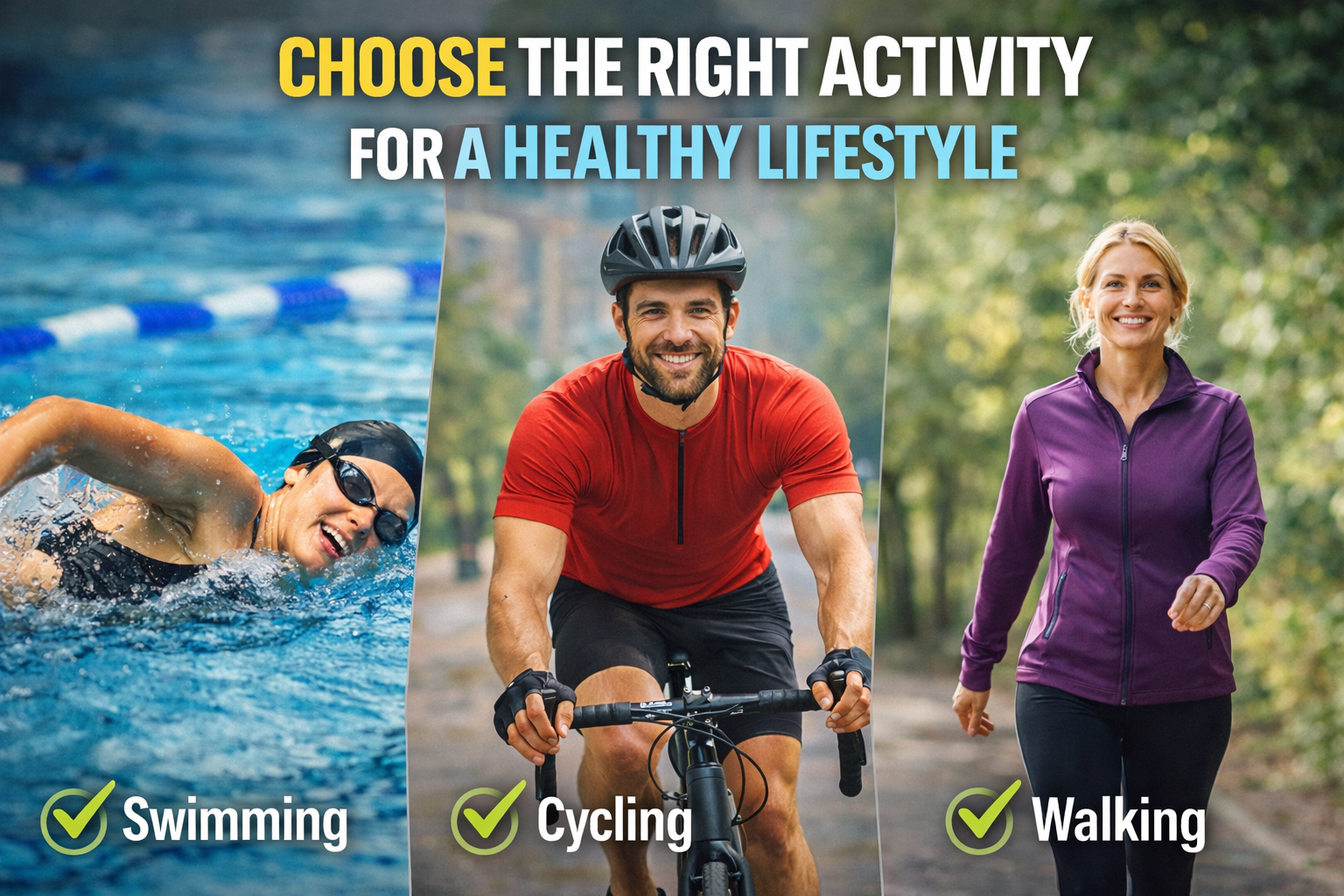
Choosing the right physical activity is one of the most important steps toward a healthy lifestyle. Many people want to stay fit, reduce stress, manage weight, or improve overall health, but often feel confused about which activity is best for them. With so many options like walking, cycling, yoga, gym workouts, swimming, or dance fitness, it can feel difficult to decide where to begin.
The truth is, the best activity is not the most intense one — it is the one that you can enjoy and continue regularly. A healthy lifestyle is built through consistency, not perfection. When an activity fits your routine, comfort level, and health goals, it becomes easier to stay motivated.
This guide will help you understand how to choose the right activity based on your needs, lifestyle, and preferences. It also explains the role of nutrition, recovery, and simple weekly planning to help you maintain long-term wellness.
Why Choosing the Right Activity Matters
Every individual has different health goals, body types, daily schedules, and energy levels. Selecting the wrong activity may lead to lack of motivation, fatigue, or inconsistency.
Choosing a suitable activity helps:
- Build long-term healthy habits
- Reduce risk of injury
- Improve physical fitness gradually
- Maintain motivation
- Balance mental and physical wellness
- Manage stress effectively
When an activity feels comfortable and enjoyable, it becomes part of daily routine naturally.
Common Problems People Face When Choosing an Activity
Many people start an exercise routine but stop within a few weeks. This often happens due to unrealistic expectations or choosing activities that do not suit their lifestyle.
1. Confusion Due to Too Many Options
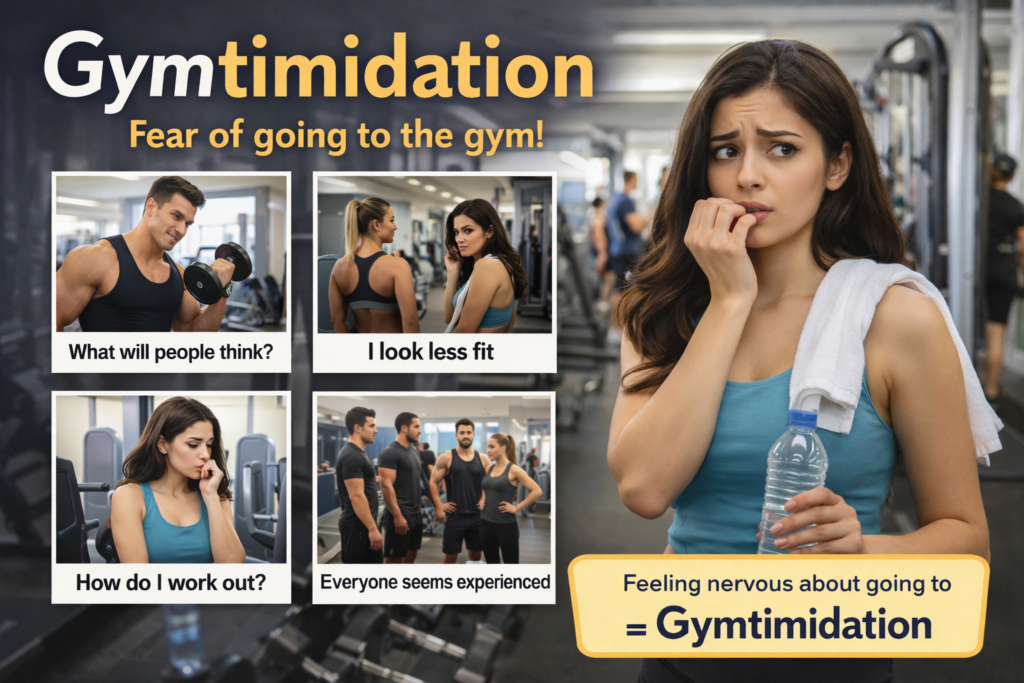
Fitness trends on social media can create pressure to follow popular workouts, even if they are not suitable for beginners.
2. Lack of Time
Busy schedules may make it difficult to follow long or complex workout routines.
3. Starting Too Intensely
Very intense workouts in the beginning can cause fatigue or muscle soreness.
4. Lack of Enjoyment
If an activity feels boring or stressful, it becomes difficult to continue regularly.
5. Unrealistic Expectations
Expecting quick results may lead to disappointment.
Understanding these challenges helps in making better decisions.
Types of Activities for a Healthy Lifestyle
Different activities provide different health benefits. Choosing one depends on your interest and comfort level.
Cardio Activities
Cardio exercises improve heart health and stamina.
Examples:
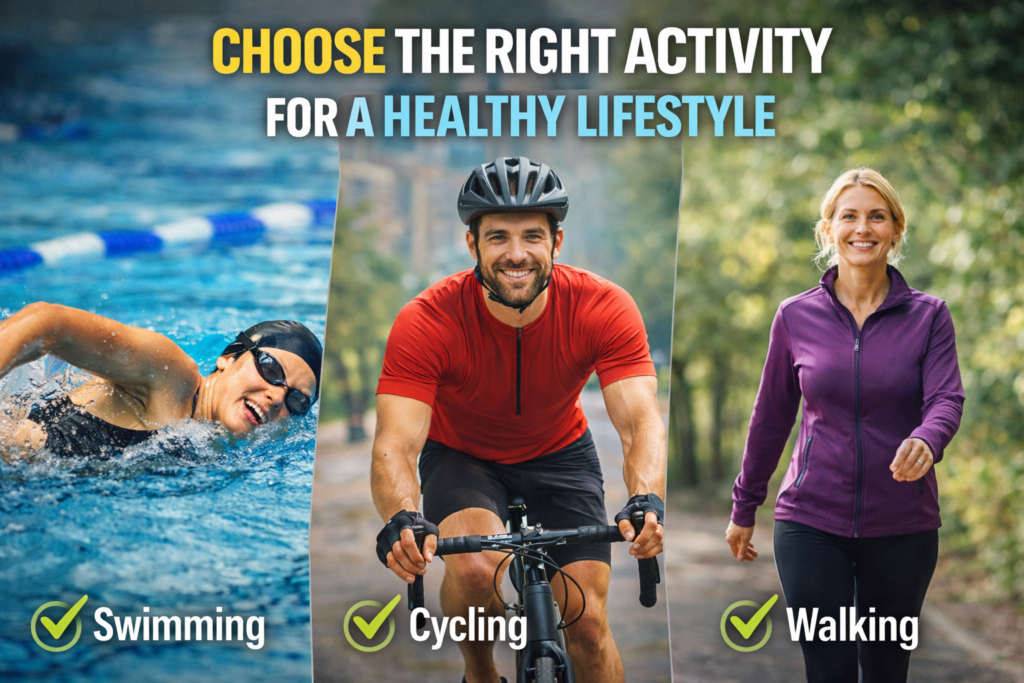
- Walking
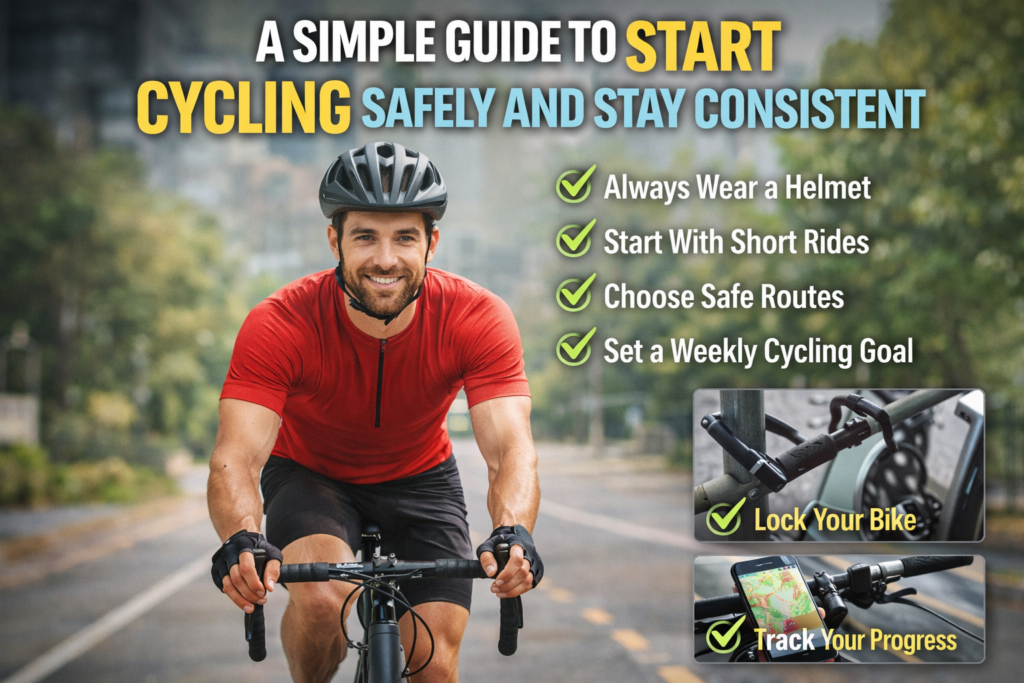
- Cycling
- Jogging
- Swimming
- Dancing
Strength-Based Activities
These activities help build muscle strength.
Examples:
- Bodyweight exercises
- Gym training
- Resistance band workouts
Flexibility and Mind-Body Activities
These activities improve balance and relaxation.
Examples:
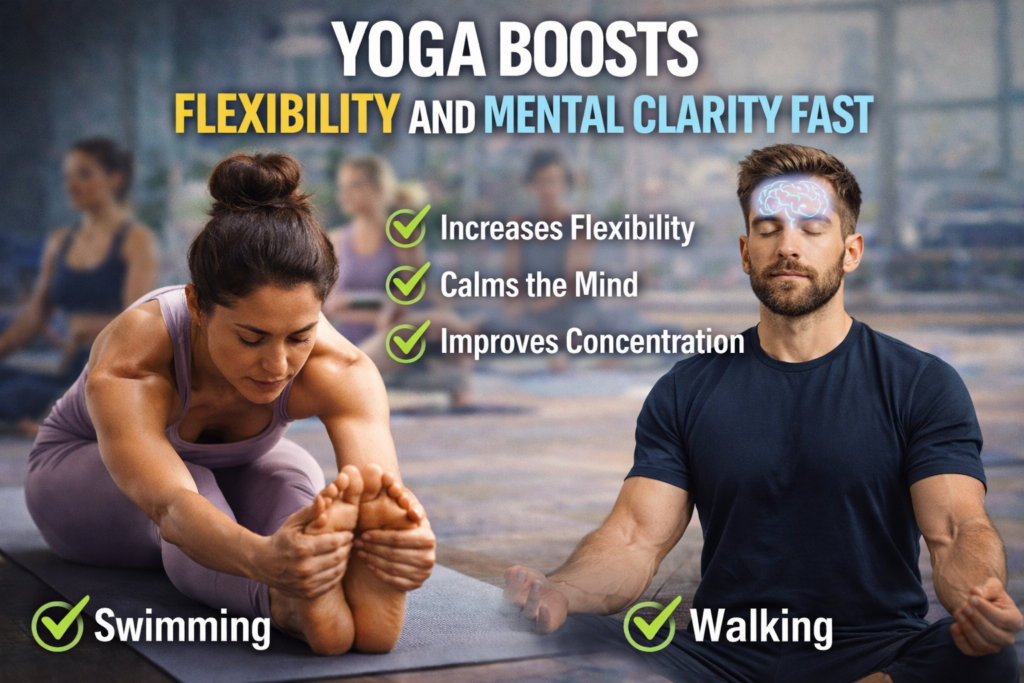
- Yoga
- Stretching
- Pilates
A combination of different activities provides balanced fitness.
How Physical Activity Supports Overall Wellness
Regular physical activity supports both physical and mental health.
Physical Benefits
- Improves heart health
- Supports healthy weight management
- Improves muscle strength
- Enhances flexibility
- Improves stamina
Mental Benefits
- Helps reduce stress
- Improves mood
- Boosts confidence
- Improves sleep quality
- Enhances focus
Consistent activity helps maintain long-term wellness.
Step-by-Step Guide to Choose the Right Activity
Following a simple approach makes decision easier.
Step 1: Identify Your Goal
Different goals may require different activities.
Goal | Suitable Activities |
Weight management | Walking, cycling, cardio |
Strength improvement | Gym, bodyweight exercises |
Stress relief | Yoga, walking, stretching |
Stamina improvement | Cycling, jogging |
Flexibility | Yoga, Pilates |
Clear goal helps in selecting right activity.
Step 2: Consider Your Current Fitness Level
Beginners should start with low-intensity activities.
Examples:
- Walking
- Light cycling
- Stretching
- Beginner yoga
Gradual progress helps prevent injury.
Step 3: Choose an Activity You Enjoy
Enjoyment increases consistency.
Ask yourself:
- Do you prefer indoor or outdoor activity?
- Do you enjoy group activities?
- Do you prefer calm or energetic workouts?
Enjoyable activities become habits easily.
Step 4: Check Time Availability
Choose activity that fits your daily routine.
Even 20–30 minutes daily activity can provide benefits.
Consistency is more important than duration.
Step 5: Start Small and Build Routine
Avoid long sessions in the beginning.
Example:
- Start 3–4 days per week
- Gradually increase duration
- Focus on regular practice
Small steps give better results.
Weekly Activity Plan for Balanced Lifestyle
A simple weekly plan helps maintain consistency.
Day | Activity |
Monday | Walking or cycling |
Tuesday | Strength exercises |
Wednesday | Yoga or stretching |
Thursday | Cardio activity |
Friday | Strength training |
Saturday | Light activity or hobby sport |
Sunday | Rest and recovery |
Balanced routine supports overall fitness.
Comparison of Popular Fitness Activities
Activity | Best For | Difficulty Level |
Walking | Beginners | Easy |
Cycling | Stamina and weight balance | Easy to moderate |
Yoga | Flexibility and stress relief | Easy |
Gym training | Strength improvement | Moderate |
Swimming | Full body fitness | Moderate |
Dance fitness | Fun cardio | Easy |
Choose activity that matches comfort level.
Role of Nutrition in Supporting Active Lifestyle
Nutrition provides energy required for physical activity. Balanced meals help maintain stamina and support recovery.
Healthy nutrition habits support consistency in exercise routine.
Pre-Activity Nutrition Support
Eating light and balanced food before activity helps maintain energy levels.
Examples:
- Banana
- Oats
- Yogurt
- Fruit smoothie
- Whole grain toast
Some individuals include a pre-workout supplement as supportive option to maintain energy and focus before physical activity. Supplements should complement balanced diet.
Post-Activity Recovery Nutrition
After activity, body requires nutrients for muscle recovery.
Examples:
- Milk or plant-based protein drink
- Dal and rice
- Paneer or tofu
- Sprouts salad
- Nuts and seeds
Some individuals include a post-workout supplement as supportive option depending on nutritional needs.
Balanced home diet remains most important.
Tips to Stay Consistent with Physical Activity
Consistency helps build long-term healthy lifestyle.
- Fix a daily activity time
- Choose comfortable clothing
- Track progress weekly
- Avoid comparing with others
- Take proper rest
- Stay hydrated
- Maintain positive mindset
Healthy habits develop gradually.
Signs You Have Chosen the Right Activity
Right activity feels manageable and enjoyable.
Positive signs include:
- Feeling motivated to continue
- Improved energy levels
- Better mood
- Comfortable routine
- Gradual improvement in stamina
When activity feels natural, consistency becomes easier.
Conclusion
Choosing the right activity for a healthy lifestyle does not have to be complicated. The best exercise is the one that suits your body, routine, and interest. Starting with simple activities and gradually increasing intensity helps build confidence and long-term consistency.
Balanced nutrition, proper rest, and realistic goals support better results. Small daily efforts can create big improvements in physical and mental wellness.
A healthy lifestyle is not about doing everything perfectly — it is about staying active regularly and making choices that support your wellbeing.