Benefits of Training With a Strong Mind-Muscle Connection
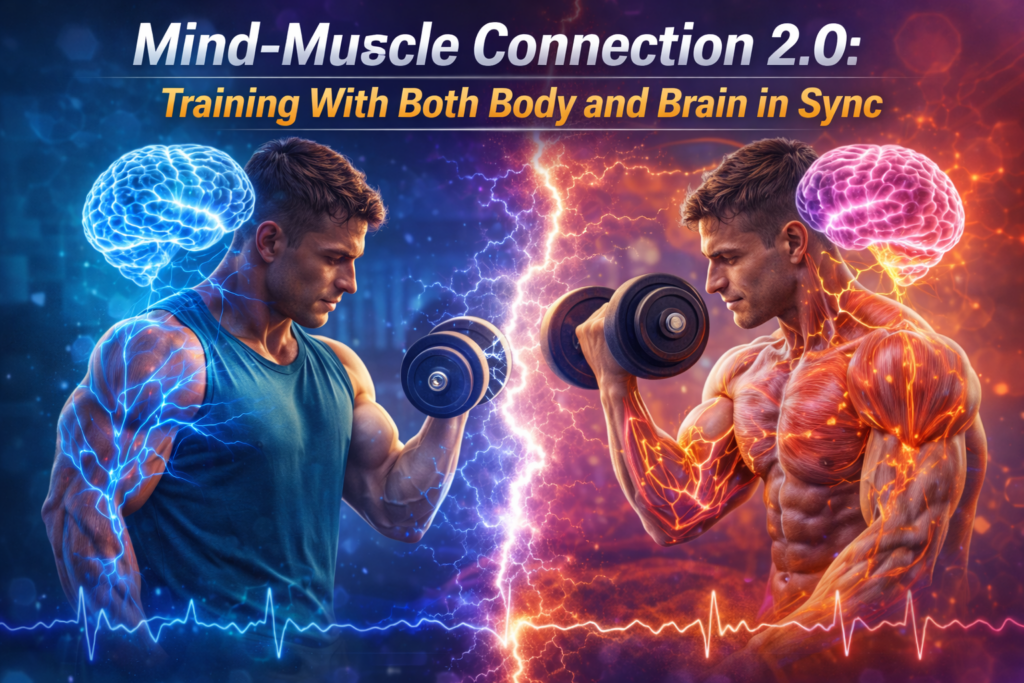
1. Better Muscle ActivationMost people approach workouts as a purely physical task: lift the weight, finish the reps, move on. But strength training isn’t just a test of muscles—it’s a conversation between your brain and body. This is where the mind-muscle connection comes in, and why the modern approach can be thought of as Mind-Muscle Connection 2.0.
Instead of simply moving weight from point A to point B, this updated perspective focuses on intentional movement, awareness, and neural control. When your brain and muscles work in sync, training becomes more efficient, safer, and surprisingly more effective for muscle development.
What Is the Mind-Muscle Connection?
The mind-muscle connection refers to the ability to consciously focus on and control a specific muscle during an exercise. It’s not about visualization alone—it’s about directing neural signals more precisely to the working muscle.
In simple terms, it means:
Knowing which muscle should be working
Feeling it contract and lengthen during each rep
Reducing unnecessary involvement from other muscles
This connection is rooted in how the nervous system activates muscle fibers. The clearer the signal, the better the response.
Why “Mind-Muscle Connection 2.0”?
The traditional understanding of the mind-muscle connection focused mainly on “feeling the muscle burn.” While sensation matters, modern training emphasizes neuromuscular efficiency, not just sensation.
Mind-Muscle Connection 2.0 expands the idea to include:
Movement awareness
Controlled tempo
Proper exercise setup
Reduced momentum
Better coordination between joints and muscles
It’s less about chasing a pump and more about training with purpose.
How the Brain Controls Muscle Activation
Every rep you perform starts in the brain. Before a muscle contracts, the nervous system sends electrical signals that determine:
Which muscle fibers are recruited
How forcefully they contract
How long the contraction lasts
When movements are rushed or sloppy, these signals become scattered. Other muscles jump in to compensate, and the target muscle does less work than intended.
A strong mind-muscle connection helps the brain prioritize the correct muscle, improving the quality of each repetition.
Why Heavier Weights Don’t Always Mean Better Results
Lifting heavier weights often shifts focus from control to completion. When the load is too heavy:
Momentum increases
Supporting muscles take over
Range of motion shortens
The target muscle receives less tension
This doesn’t mean heavy lifting is bad. It means that intent matters more than load for certain goals, especially muscle hypertrophy and joint health.
Many people notice better muscle engagement—and sometimes better growth—when they slightly reduce weight and improve control.
When your focus is on the working muscle, it receives more consistent tension throughout the movement. This leads to more effective training stimulus per set.
2. Improved Training Efficiency
Instead of adding more sets or exercises, you get more out of the work you already do. Fewer “wasted reps” means better use of time and energy.
3. Reduced Injury Risk
Controlled movements and awareness of joint position reduce unnecessary strain. This is especially helpful for shoulders, knees, and lower back.
4. Stronger Long-Term Progress
By reinforcing proper movement patterns, the nervous system learns to activate muscles more effectively over time. This supports sustainable progress rather than short-term intensity spikes.
Common Reasons People Struggle With Mind-Muscle Connection
Many people don’t lack discipline—they lack awareness.
Common obstacles include:
- Using weights that are too heavy
- Rushing through repetitions
- Poor exercise setup or posture
- Distracted training environments
- Lack of familiarity with muscle function
These factors reduce the brain’s ability to send clear signals to the target muscle.
How to Develop the Mind-Muscle Connection
Slow Down Your Reps
Tempo matters more than most people realize.
Try:
- Controlled lifting (1–2 seconds)
- Slower lowering (2–3 seconds)
- Brief pauses at peak contraction
This gives the brain time to recognize and reinforce the correct muscle activation.
Focus on the Working Muscle, Not the Weight
Instead of thinking “finish the set,” think:
- Which muscle is shortening?
- Which muscle is controlling the movement?
- Where do I feel tension?
This mental shift alone can dramatically improve engagement.
Improve Exercise Setup
Small adjustments in stance, grip, or bench angle can change which muscle does the work.
Examples include:
- Adjusting foot placement
- Aligning joints properly
- Stabilizing the core before lifting
Good setup creates a better foundation for neural control.
Use Warm-Up Sets Strategically
Warm-up sets aren’t just for joints—they prepare the nervous system.
Light, controlled sets help:
- Activate target muscles
- Improve movement awareness
- Reinforce correct patterns before heavier loads
Skipping this step often leads to poor engagement later in the workout.
Compound vs Isolation Exercises: Where the Connection Matters Most
The mind-muscle connection plays a role in all exercises, but its impact varies.
Isolation Exercises
Isolation movements are ideal for developing awareness because they limit assistance from other muscles.
Examples include:
- Bicep curls
- Leg extensions
- Lateral raises
These exercises are excellent for learning how to consciously contract a muscle.
Compound Exercises
In compound lifts, multiple muscles work together. While you can’t isolate one muscle completely, you can still bias tension toward a specific area through:
- Controlled tempo
- Proper range of motion
- Intentional focus
This helps maintain good mechanics even under heavier loads.
Breathing and the Mind-Muscle Connection
Breathing affects muscle activation more than most people realize.
Poor breathing can:
- Reduce stability
- Increase tension in the wrong areas
- Distract focus
Steady, controlled breathing supports better coordination between the nervous system and muscles, especially during challenging sets.
Does the Mind-Muscle Connection Improve Muscle Growth?
Research and real-world experience suggest that improved muscle activation can increase hypertrophy stimulus, especially during moderate-load training.
More importantly, it helps ensure that:
- The intended muscle is doing the work
- Training volume is effective, not just exhausting
- Progress is sustainable over time
It’s not a shortcut—but it’s a multiplier for smart training.
Who Benefits Most From Mind-Muscle Connection Training?
This approach is useful for:
- Beginners learning proper movement patterns
- Intermediate lifters breaking plateaus
- People returning after a training break
- Anyone focused on form, longevity, and balance
Even advanced lifters often revisit these principles to refine technique.
Mind-Muscle Connection 2.0: Training With Awareness, Not Ego
Training with both body and brain in sync doesn’t mean training lightly or avoiding intensity. It means earning intensity through control.
By improving awareness, slowing down when needed, and focusing on quality over momentum, you build a stronger foundation for long-term progress.
The mind-muscle connection isn’t about overthinking every rep. It’s about respecting how the body learns, adapts, and performs best—when the brain is fully involved.