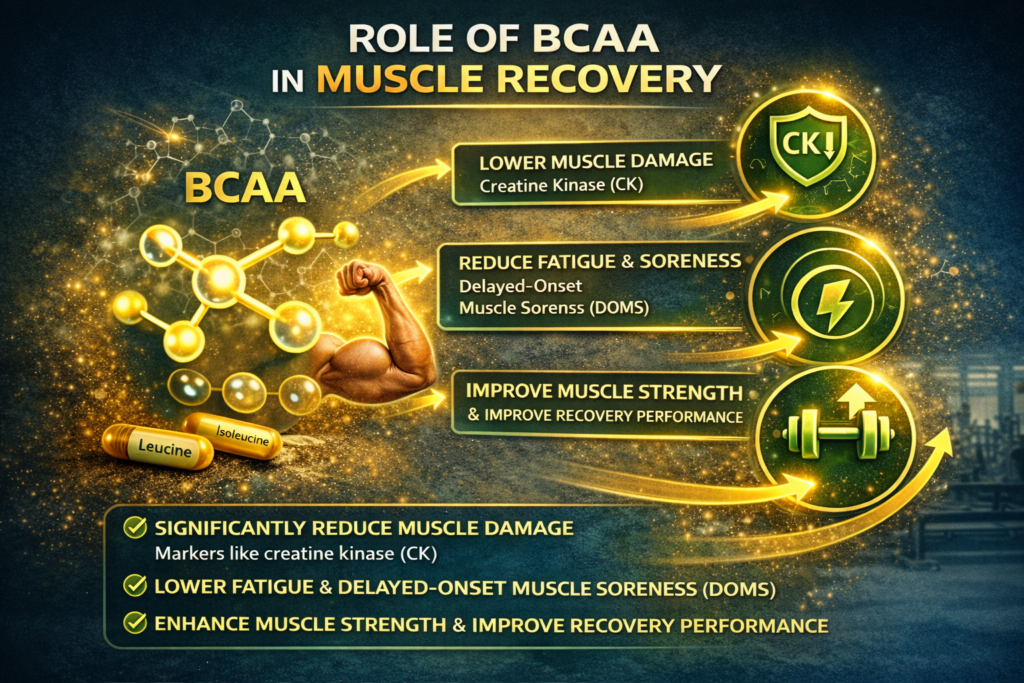
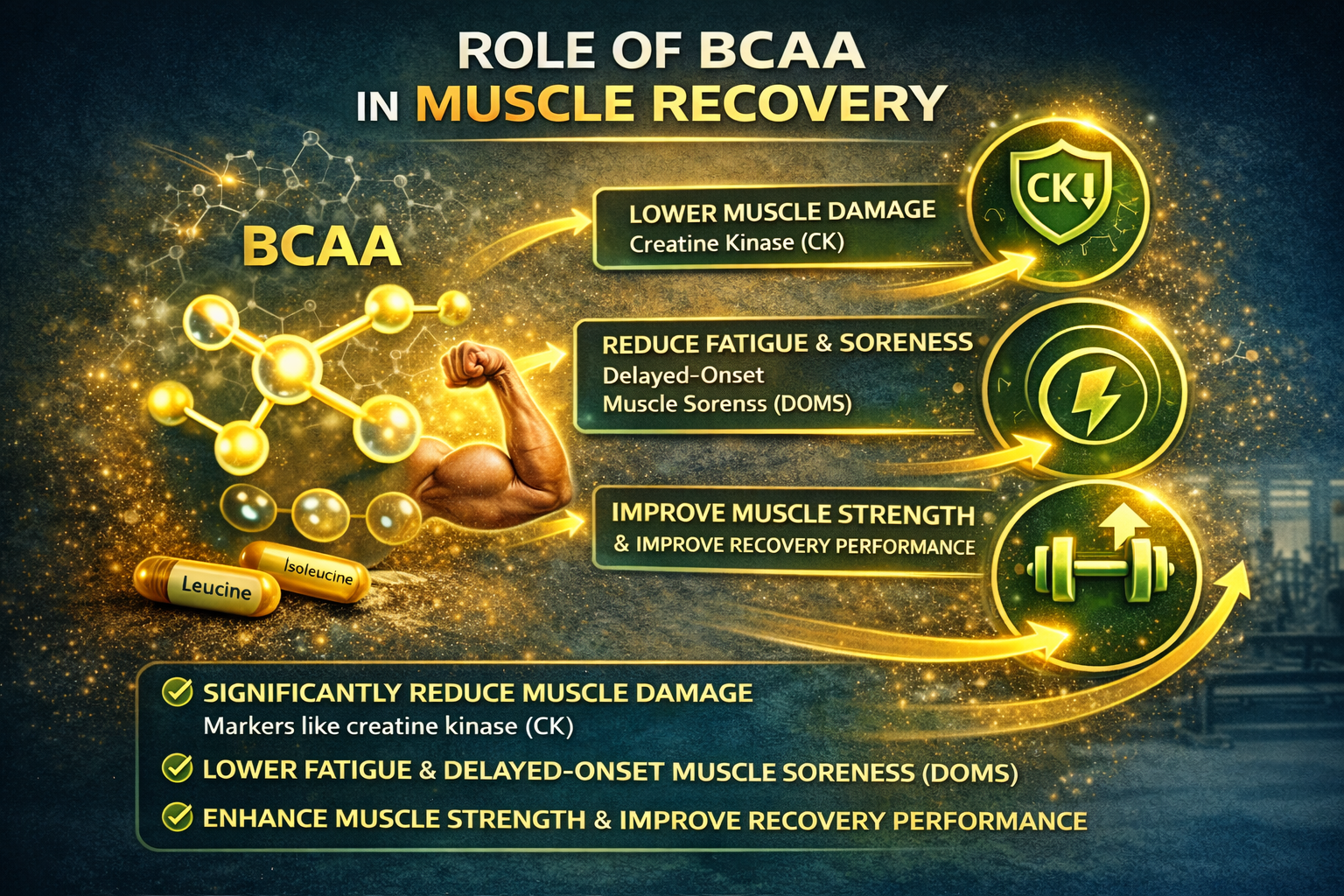
Branched-chain amino acids (BCAAs) help in muscle recovery primarily by reducing muscle damage, soreness, and improving muscle function after exercise. Clinical trials and meta-analyses show that BCAA supplementation significantly lowers creatine kinase (a marker of muscle damage) following exhaustive exercise and reduces delayed-onset muscle soreness (DOMS) especially in trained individuals. BCAA supplementation also aids faster recovery of muscle strength and performance, attenuates loss of muscle power, and may improve exercise performance by influencing fatigue and muscle damage substances.
Clinical Evidence Highlights
- BCAAs significantly reduce creatine kinase levels within 24 hours post-exercise, indicating decreased muscle damage compared to placebo or rest.
- Supplementation reduces muscle soreness and accelerates recovery of strength and jump performance after resistance and endurance exercise.
- Effective doses noted are around 0.087 g/kg body mass or up to 255 mg/kg/day, especially in trained subjects and for mild to moderate exercise-induced muscle damage.
- BCAAs lower fatigue substances like serotonin and muscle damage enzymes like CK and LDH, improving metabolic efficiency during prolonged exercise.
- Long-term BCAA use showed improved muscle mass, strength, and physical performance in clinical studies with sarcopenic patients.
Key Mechanisms
- BCAAs support muscle protein synthesis and repair.
- They reduce markers of muscle damage and inflammation.
- Enhance energy metabolism by modulating fatigue substances.
- Attenuate delayed-onset muscle soreness and improve functional recovery.
This systematic research evidence provides a clear justification for BCAA supplementation as an effective nutritional strategy for enhancing recovery after exercise.