Importance of Protein Timing for Better Performance and Recovery
Whether you’re a professional athlete, a fitness enthusiast, or someone who enjoys regular workouts, protein is one of the most important nutrients for your body. Most people know that eating enough protein is essential, but many overlook when they should eat it.
This is where protein timing becomes important.
While your total daily protein intake matters the most, consuming protein at the right times can improve muscle recovery, support muscle growth, reduce soreness, and help you perform better during training.
In this guide, you’ll learn the science behind protein timing, the best times to consume protein, common mistakes to avoid, and practical tips to make protein work better for your fitness goals.
What Is Protein Timing?
Protein timing simply means planning when you eat protein throughout the day, especially around your workout sessions.
Instead of eating most of your daily protein in one meal, experts recommend spreading it evenly across the day and including protein before and after exercise.
The goal is to give your muscles a steady supply of amino acids—the building blocks needed for:
- Muscle repair
- Muscle growth
- Faster recovery
- Better strength gains
- Improved athletic performance
Why Protein Is Essential for Exercise Performance
Every workout creates small amounts of stress and microscopic damage in muscle fibers.
This isn’t harmful—it is actually how muscles become stronger. However, your body needs protein to repair these fibers.
Protein helps:
- Repair damaged muscle tissue
- Build lean muscle mass
- Maintain muscle during weight loss
- Support immune function
- Produce enzymes and hormones
- Improve recovery after intense exercise
Without enough protein, recovery becomes slower, fatigue increases, and progress may stall.
Does Protein Timing Really Matter?
Many studies suggest that meeting your daily protein requirement is the biggest priority. However, consuming protein around workouts can provide additional benefits, especially for athletes and people who train regularly.
Protein timing can help:
- Increase muscle protein synthesis
- Reduce muscle breakdown
- Improve muscle recovery
- Support strength development
- Enhance endurance training adaptation
The effect is most noticeable when combined with a balanced diet and consistent training.
Best Time to Eat Protein
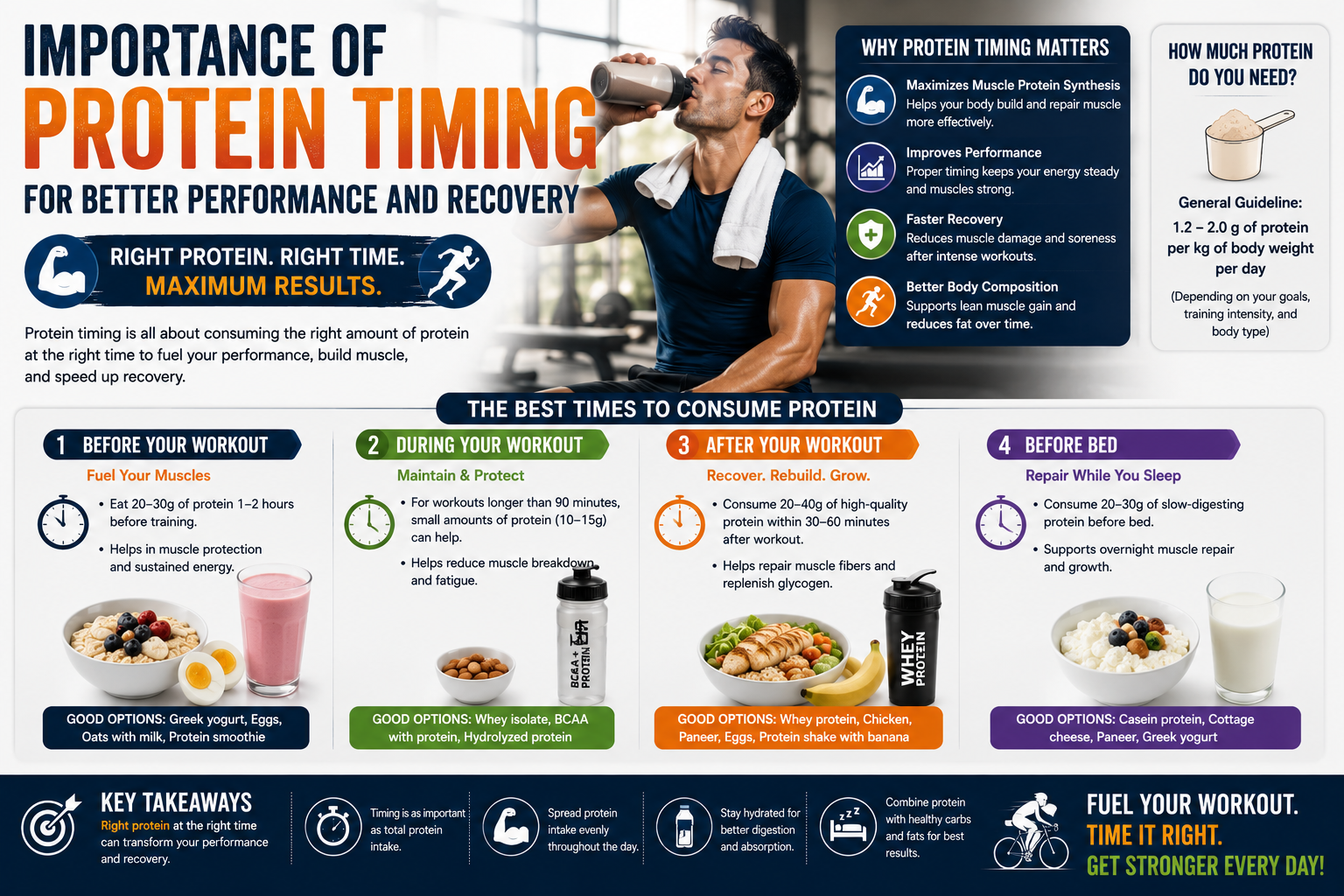
Before Your Workout
Eating protein about 1–3 hours before exercise provides amino acids that remain available during training.
Good pre-workout protein choices include:
- Greek yogurt
- Paneer
- Eggs
- Milk
- Tofu
- Peanut butter with whole-grain bread
- Protein smoothie
Pairing protein with carbohydrates provides additional energy for exercise.
For people looking for convenient workout nutrition, a scientifically formulated pre-workout supplement may also be considered depending on individual needs. Learn more about a balanced approach to <a href=”https://winsia.co.in/product/winrec/”>pre-workout supplement</a> nutrition.
After Your Workout
The period after exercise is when muscles begin repairing themselves.
Consuming protein within approximately 30 minutes to 2 hours after training helps support recovery by supplying essential amino acids.
Good post-workout protein sources include:
- Whey protein
- Milk
- Eggs
- Chicken
- Fish
- Soy products
- Dal with rice
- Cottage cheese
If whole foods aren’t immediately available, some individuals choose a post-workout supplement as part of their recovery nutrition. Learn more about <a href=”https://winsia.co.in/product/post-workout/”>post-workout supplement</a> options that complement a balanced diet.
How Much Protein Should You Eat?
Protein requirements vary depending on activity level.
Activity Level | Daily Protein Recommendation |
Sedentary adults | 0.8 g/kg body weight |
Regular exercisers | 1.0–1.4 g/kg |
Strength athletes | 1.6–2.2 g/kg |
Endurance athletes | 1.2–2.0 g/kg |
Fat loss with training | 1.6–2.4 g/kg |
Instead of consuming most protein in dinner, aim to divide it evenly into 3–5 meals throughout the day.
Why Spreading Protein Throughout the Day Works Better
Research suggests that distributing protein intake evenly supports muscle protein synthesis more effectively than eating one very high-protein meal.
A balanced approach may look like:
Meal | Protein Source |
Breakfast | Eggs or Greek yogurt |
Mid-morning | Milk or nuts |
Lunch | Dal, paneer, chicken, tofu |
Evening snack | Protein smoothie |
Dinner | Fish, chicken, soy, lentils |
This pattern provides muscles with regular access to amino acids.
Benefits of Proper Protein Timing
Faster Muscle Recovery
Protein helps repair damaged muscle fibers after exercise, allowing you to recover more efficiently.
Better Muscle Growth
Resistance training combined with timely protein intake supports muscle-building processes.
Reduced Muscle Soreness
Protein supports tissue repair, which may reduce post-workout discomfort.
Improved Athletic Performance
Athletes who recover faster can train more consistently and maintain higher performance.
Better Body Composition
Adequate protein helps preserve lean muscle while supporting healthy fat loss.
Stronger Immune Function
Regular exercise places stress on the immune system. Protein provides amino acids necessary for immune cell production.
Protein Timing for Different Types of Athletes
Strength Athletes
Weightlifters benefit from protein before and after training to maximize muscle repair and growth.
Endurance Athletes
Runners and cyclists need protein alongside carbohydrates to repair muscles after prolonged exercise.
Team Sports Players
Football, cricket, hockey, and basketball players often perform repeated high-intensity efforts. Timely protein intake supports faster recovery between sessions.
Older Adults
Age-related muscle loss can be reduced by consuming adequate protein evenly throughout the day.
Best Natural Protein Sources
Animal-based options:
- Eggs
- Chicken
- Fish
- Lean meat
- Milk
- Greek yogurt
- Cottage cheese
Plant-based options:
- Lentils
- Chickpeas
- Rajma
- Soybeans
- Tofu
- Tempeh
- Paneer
- Quinoa
- Nuts and seeds
A variety of protein sources ensures you receive essential amino acids along with vitamins and minerals.
Role of Overall Nutrition
Protein alone cannot maximize performance.
For the best recovery, combine protein with:
Carbohydrates
Restore muscle glycogen after exercise.
Examples:
- Rice
- Fruits
- Oats
- Sweet potatoes
Healthy Fats
Support hormone production and overall health.
Examples:
- Nuts
- Seeds
- Olive oil
- Avocados
Hydration
Water supports nutrient transport and muscle recovery.
Micronutrients
Vitamin D, calcium, magnesium, iron, and zinc all contribute to muscle function and recovery.
Common Protein Timing Mistakes
Many people unknowingly reduce the benefits of their training by making simple nutrition mistakes.
Avoid these common errors:
- Eating very little protein all day and consuming most of it only at dinner
- Skipping protein after intense workouts
- Depending entirely on supplements while ignoring whole foods
- Not eating enough total daily protein
- Forgetting carbohydrates after exercise
- Ignoring hydration
- Following extreme high-protein diets without balanced nutrition
Practical Tips for Better Protein Timing
- Include protein in every major meal.
- Eat a balanced meal before training whenever possible.
- Have protein after your workout along with carbohydrates.
- Spread protein evenly throughout the day.
- Stay hydrated before, during, and after exercise.
- Prioritize whole foods and use supplements only when needed for convenience.
- Adjust protein intake according to your training intensity and goals.
Protein Timing vs Total Protein Intake
Factor | Importance |
Total daily protein | Highest priority |
Protein timing | Supports recovery and muscle growth |
Balanced meals | Essential |
Training consistency | Critical |
Sleep | Important for recovery |
Hydration | Supports performance |
The biggest improvements come from combining all these factors rather than focusing on only one.
Frequently Asked Questions
Is it necessary to drink protein immediately after a workout?
Not always. While eating protein within a couple of hours after exercise is beneficial, your total daily protein intake remains the most important factor.
Can I build muscle without protein supplements?
Yes. Many people meet their protein needs through foods such as eggs, dairy, chicken, fish, legumes, tofu, and soy products.
How much protein should I eat after exercise?
Most active adults benefit from around 20–40 grams of high-quality protein after training, depending on body size and workout intensity.
Is protein timing important for beginners?
Yes, although beginners should first focus on maintaining a balanced diet and meeting daily protein requirements before worrying about exact timing.
Can too much protein be harmful?
For healthy individuals, moderate high-protein diets are generally safe. However, excessive intake beyond your needs offers little additional benefit. If you have kidney disease or other medical conditions, consult a healthcare professional before making significant dietary changes.
Conclusion
Protein timing is not a magic solution, but it is a practical nutrition strategy that can support better performance, faster recovery, and improved muscle health. While meeting your total daily protein needs should always be your first priority, consuming protein before and after workouts and spreading it evenly throughout the day can provide additional benefits.
Combine proper protein timing with regular exercise, quality sleep, balanced meals, hydration, and consistent training to achieve the best long-term fitness results.
Whether your goal is building muscle, improving endurance, recovering faster, or maintaining an active lifestyle, smart protein timing can help your body perform at its best.