Nutrition Tips for Long-Distance Cyclists: What to Eat Before, During, and After a Ride
Long-distance cycling is not just a test of fitness. It is also a test of how well you fuel and hydrate your body. A cyclist may have strong legs and excellent endurance, but poor nutrition can still lead to early fatigue, low energy, muscle discomfort, or difficulty finishing a long ride.
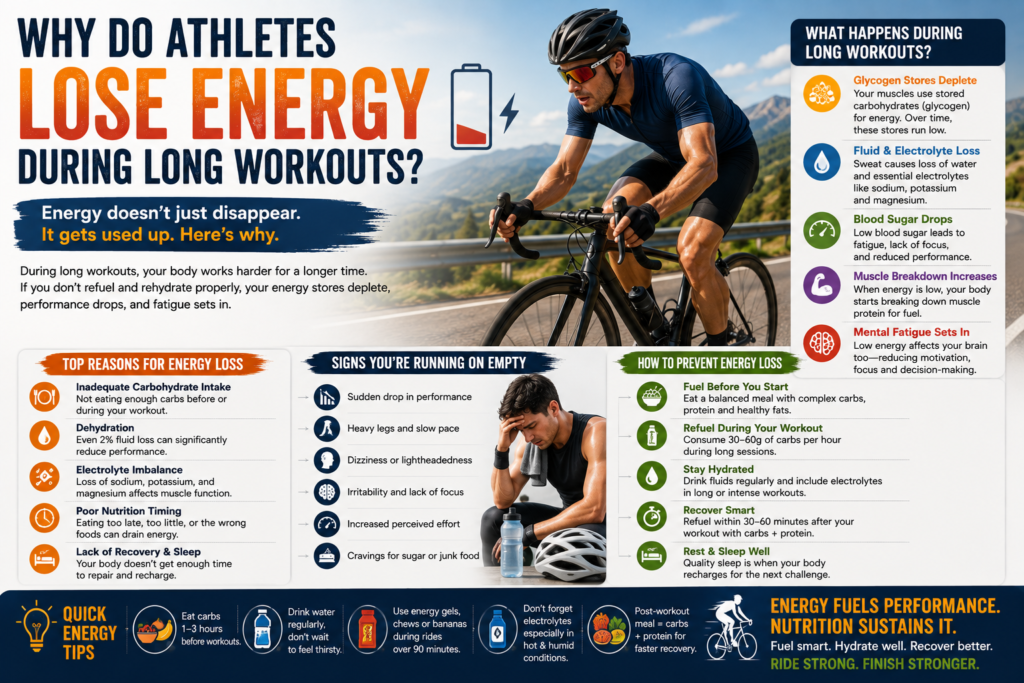
For rides lasting several hours, the body needs a steady supply of carbohydrates, fluids, electrolytes, and protein. Nutrition becomes especially important as the ride gets longer because muscle glycogen stores gradually decline and fluid losses increase through sweat.
The good news is that nutrition for long-distance cyclists does not have to be complicated. With a little planning, you can create a practical fueling routine that works with your training, your food preferences, and the demands of your ride.
This guide explains what to eat before cycling, how to fuel during a long ride, what to drink, how to recover afterward, and the common nutrition mistakes cyclists should avoid.
Why Nutrition Matters for Long-Distance Cycling
Cycling for several hours requires a continuous supply of energy. During endurance exercise, carbohydrates are an important fuel source because they can be converted into energy relatively quickly. The body stores carbohydrates mainly as glycogen in the muscles and liver.
As exercise continues, these stores gradually decrease. If a cyclist does not replace enough carbohydrate during a long ride, fatigue can become more noticeable and maintaining pace may become difficult.
Nutrition also supports other aspects of cycling performance, including:
- Maintaining energy levels
- Supporting muscle function
- Replacing fluids lost through sweat
- Supporting concentration
- Delaying excessive fatigue
- Supporting recovery after the ride
Sports nutrition guidance emphasizes that the right type, amount, and timing of food and fluids can support both performance and recovery.
How Long-Distance Cycling Changes Your Nutrition Needs
A short recreational ride and a four-hour endurance ride do not place the same demands on the body.
For shorter rides, normal meals may provide enough energy. As duration and intensity increase, cyclists need to pay more attention to what they consume before and during the ride.
Ride Duration | Main Nutrition Focus |
Under 60 minutes | Normal meals and hydration |
60–90 minutes | Hydration and some carbohydrate may be useful |
1–2.5 hours | Regular carbohydrate intake becomes more important |
Over 2.5 hours | Planned carbohydrate, fluid, and electrolyte strategy |
Very long rides | Individualized fueling and recovery plan |
The exact requirements depend on pace, terrain, weather, body size, sweat rate, training status, and individual tolerance. Current cycling nutrition guidance also emphasizes that nutrition should be adapted to the specific cycling discipline and environmental conditions.
What Should Cyclists Eat Before a Long Ride?
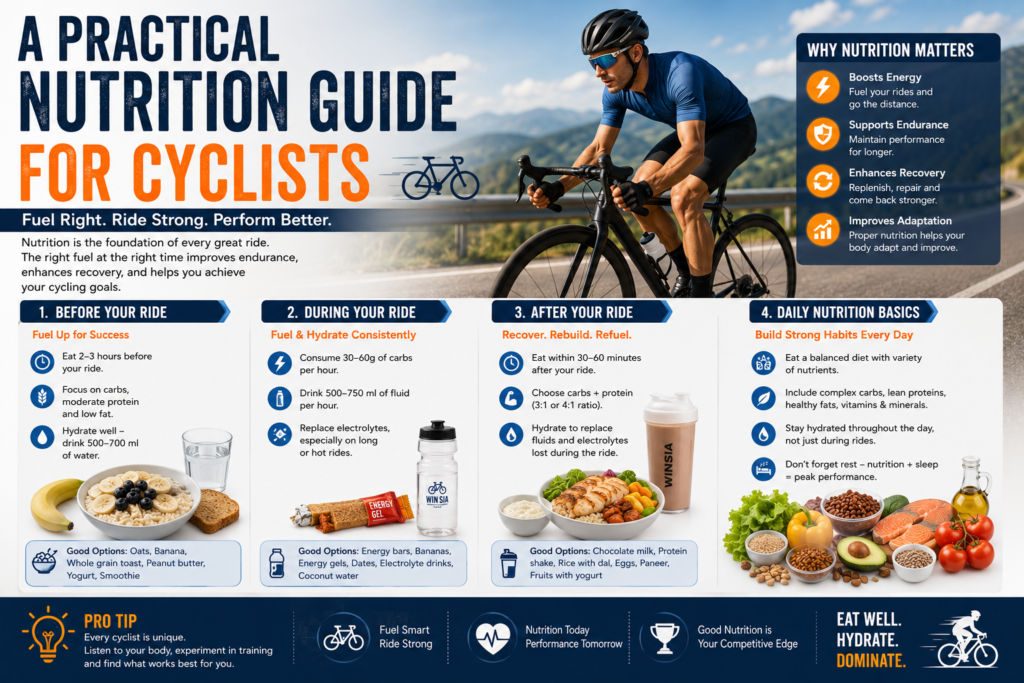
The goal of the pre-ride meal is to provide energy without causing digestive discomfort.
A meal taken around 2–4 hours before riding can focus on carbohydrate-rich foods that are familiar and easy to digest.
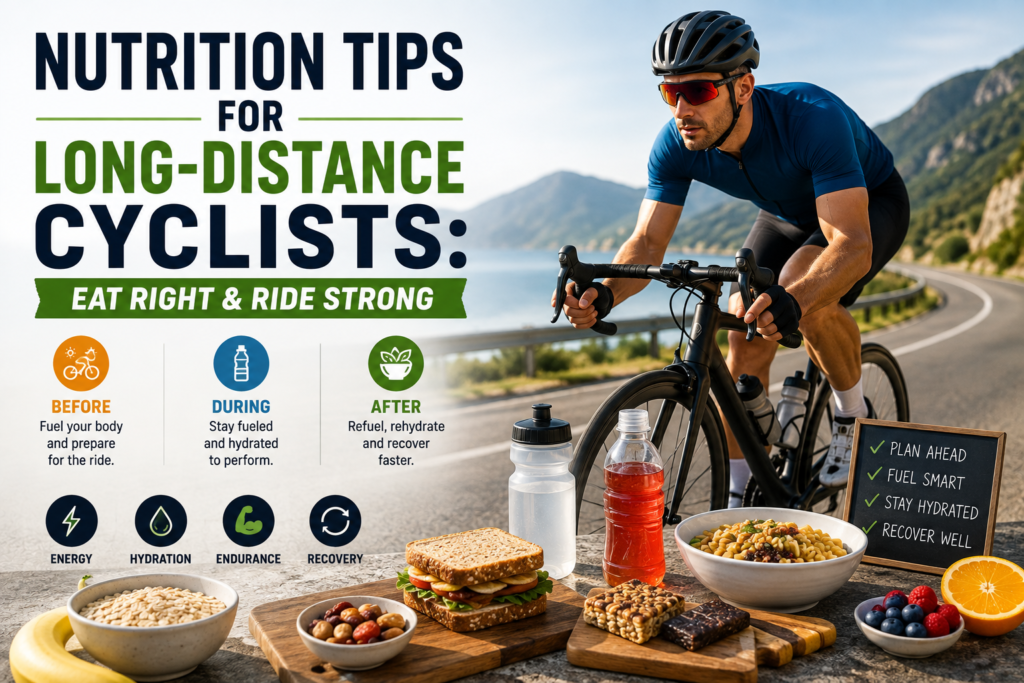
Good Pre-Ride Food Choices
- Oats with banana
- Rice with a light protein source
- Poha
- Idli with a suitable accompaniment
- Whole-grain toast with fruit
- Yogurt with oats or fruit
- A simple rice-based meal
Avoid experimenting with unfamiliar foods before an important cycling event. A food that feels fine on an ordinary day may not suit you during intense exercise.
Keep the Pre-Ride Meal Comfortable
Very heavy, greasy, or excessively high-fiber meals may cause digestive discomfort for some cyclists. Your pre-ride meal should be something you have already tested during training.
The University of Utah Health recommends a carbohydrate-focused pre-exercise meal and notes that individual tolerance should guide the exact amount.
What to Eat During a Long-Distance Cycling Ride
Once the ride becomes long, eating during the ride becomes increasingly important.
The goal is to provide carbohydrates regularly rather than waiting until you feel completely exhausted.
For exercise lasting more than an hour, sports nutrition guidance commonly recommends carbohydrate intake during exercise. A traditional guideline is around 30–60 g of carbohydrate per hour, while some experienced endurance athletes can use higher amounts when their gut has been trained to tolerate them.
Practical On-the-Bike Food Options
Depending on your ride and tolerance, options can include:
- Bananas
- Dates
- Energy gels
- Sports drinks
- Energy bars
- Chikki
- Small portions of sandwiches
- Idli or other familiar carbohydrate-rich foods during longer breaks
The best choice depends on what your stomach tolerates and how easily you can carry and consume the food.
Eat Before You Feel Empty
One common mistake is waiting until hunger becomes intense. During a long ride, regular small amounts are often easier to manage than eating a large quantity after energy levels have already dropped.
Practice your fueling strategy during training rather than testing it for the first time on event day.
Hydration Tips for Long-Distance Cyclists
Hydration is just as important as food.
Cyclists lose fluid through sweat, and the amount can vary significantly depending on temperature, humidity, intensity, clothing, and individual sweat rate.
Dehydration can affect endurance and cardiovascular function, particularly during prolonged exercise in hot conditions.
A Simple Hydration Strategy
- Start the ride well hydrated.
- Carry enough fluids for the planned route.
- Drink regularly rather than waiting until you are extremely thirsty.
- Increase attention to hydration in hot and humid weather.
- Consider electrolytes during longer or sweat-heavy rides.
There is no single fluid amount that works for every cyclist. Your sweat rate and riding conditions should guide your individual plan.
Why Electrolytes Matter
Sweat contains electrolytes, particularly sodium. During prolonged cycling, especially in hot conditions, replacing some of these minerals may be useful.
Electrolytes are involved in:
- Fluid balance
- Nerve function
- Muscle contraction
- Normal body function
For long rides, carbohydrate-electrolyte drinks can provide both fuel and fluids. ACSM guidance notes that carbohydrate and electrolyte-containing fluids can be useful during exercise lasting longer than an hour.
However, electrolyte needs vary considerably between individuals. Avoid assuming that more electrolytes are always better.
The Role of Carbohydrates in Cycling Nutrition
Carbohydrates are particularly important for endurance cyclists because they provide readily available energy and help maintain blood glucose during prolonged exercise.
Useful Carbohydrate Sources
- Rice
- Oats
- Potatoes
- Sweet potatoes
- Bananas
- Dates
- Bread
- Pasta
- Poha
- Idli
- Fruits
For very long rides, cyclists can combine everyday foods with convenient sports nutrition products depending on preference and practicality.
The important point is consistency: your body needs a regular supply of fuel throughout demanding rides.
Don’t Forget Protein
Carbohydrates are central to endurance fueling, but protein also matters.
Protein supports muscle repair and recovery after training. Endurance athletes need adequate protein as part of their overall diet, particularly when training frequently.
Good protein sources include:
- Eggs
- Milk
- Yogurt
- Paneer
- Tofu
- Dal
- Beans
- Fish or lean meat
The aim is not to make every meal extremely high in protein. Instead, include an appropriate protein source regularly throughout the day.
Pre-Workout Support for Long-Distance Cyclists
Some cyclists use a pre-workout product before training to support energy and workout readiness.
A normal pre-ride meal should remain the foundation. Depending on individual preferences and nutritional needs, a pre-workout supplement can be considered as an additional supportive option rather than a replacement for food.
If you use one, follow the product’s recommended serving instructions and test it during training before using it for an important event. Individual tolerance, particularly to stimulating ingredients, can vary.
Post-Ride Nutrition and Recovery
What you eat after cycling helps your body recover and prepare for the next session.
After a long ride, focus on:
- Carbohydrates to replenish glycogen
- Protein to support muscle recovery
- Fluids to replace losses
- Electrolytes when appropriate
Simple Post-Ride Meal Ideas
- Rice and dal
- Paneer with rice or roti
- Eggs with toast and fruit
- Yogurt with fruit and oats
- Milk or a suitable plant-based drink with a carbohydrate-rich meal
For cyclists who need additional nutritional support, a post-workout supplement may be considered depending on their overall diet and training requirements.
Supplements are optional. A balanced everyday diet remains the foundation of recovery nutrition.
A Simple Nutrition Plan for a Long Ride
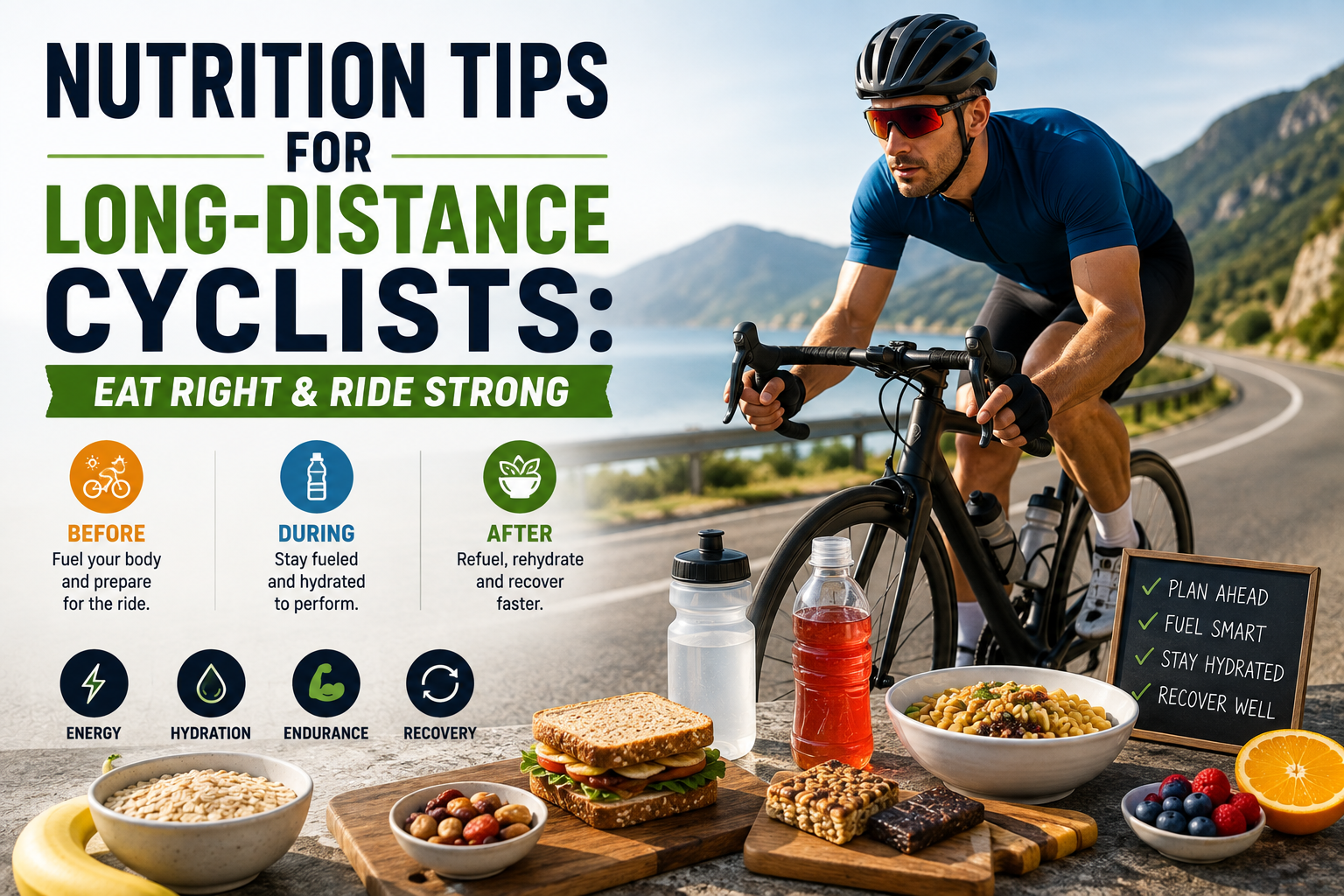
Timing | Nutrition Focus | Examples |
2–4 hours before | Carbohydrate-rich meal | Oats, rice, poha, idli, banana |
30–60 minutes before | Small snack if needed | Banana, toast, dates |
During ride | Regular carbohydrates | Gel, banana, sports drink, chikki |
During ride | Fluids | Water and/or electrolyte drink |
After ride | Carbohydrate + protein | Rice and dal, yogurt and fruit, paneer and rice |
Later in the day | Balanced meal | Carbohydrate + protein + vegetables |
This is a general framework, not a one-size-fits-all prescription.
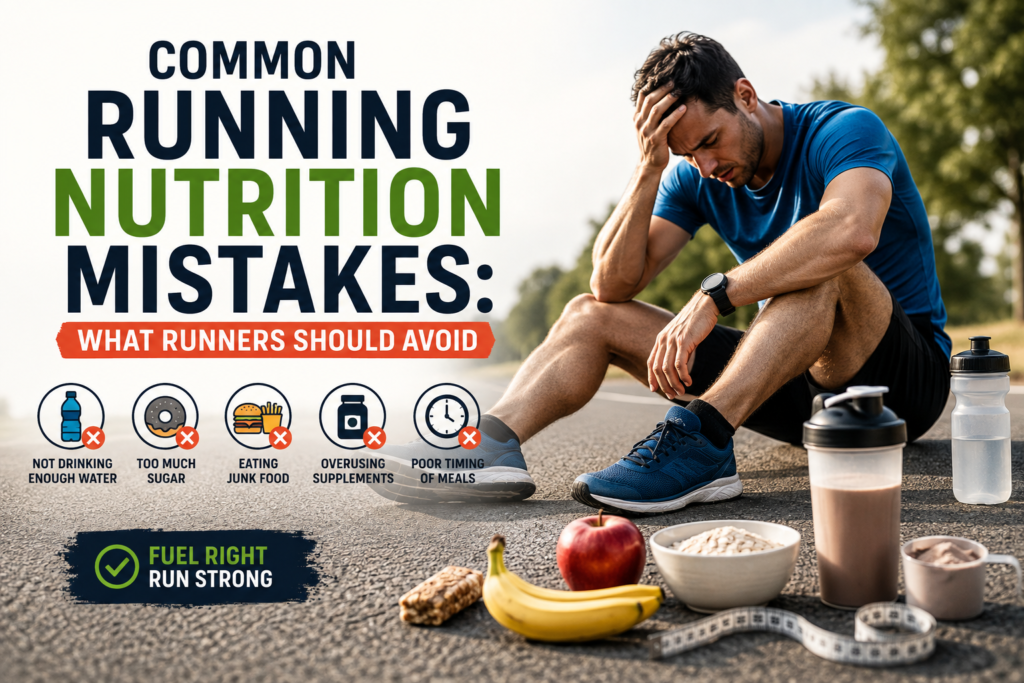
Common Nutrition Mistakes Cyclists Should Avoid
1. Starting the Ride Without Eating
Beginning a long ride under-fueled can make it harder to maintain energy later.
2. Waiting Until You’re Hungry
Fueling only after fatigue appears may be too late for maintaining a steady pace.
3. Drinking Only When Extremely Thirsty
Regular hydration is particularly important during long rides and hot weather.
4. Trying New Foods on Event Day
Your digestive system needs time to adapt to your chosen fueling strategy.
5. Eating Too Much at Once
Large quantities of food or drink can cause stomach discomfort.
6. Ignoring Recovery Nutrition
Finishing the ride is not the end of the nutrition plan. Recovery starts afterward.
How to Build Your Long-Ride Nutrition Strategy
Step 1: Check Your Ride Duration
A 90-minute ride needs a different strategy from a six-hour endurance ride.
Step 2: Plan Your Food
Decide what carbohydrate sources you will carry and where you can refill supplies.
Step 3: Plan Your Fluids
Consider weather, route length, access to water, and your personal sweat rate.
Step 4: Practice During Training
Test your food, drinks, timing, and quantities before an important ride.
Step 5: Review After Each Ride
Ask yourself:
- Did I have enough energy?
- Did I experience stomach discomfort?
- Did I drink enough?
- What worked well?
- What should I change next time?
This simple review can help you develop a personalized strategy over time.
Additional Tips for Better Cycling Nutrition
- Do not wait until race day to test your nutrition.
- Carry easily digestible foods.
- Plan for weather conditions.
- Keep emergency food with you on remote routes.
- Eat regularly on longer rides.
- Stay hydrated throughout the day, not just while cycling.
- Prioritize sleep and recovery.
- Adjust nutrition according to training intensity and duration.
- If you have specific dietary needs, work with a qualified sports dietitian.
Sports nutrition recommendations should be individualized because cyclists differ in body size, training demands, sweat rate, event duration, climate, and food tolerance.
Frequently Asked Questions
How much should I eat during a long cycling ride?
For rides lasting more than an hour, carbohydrate intake during exercise can help maintain energy. A commonly used starting range is around 30–60 g per hour, with higher amounts sometimes used by experienced endurance athletes who have trained their gut to tolerate them.
What should I eat before a long cycling ride?
Choose a familiar carbohydrate-rich meal that is easy for you to digest. Oats, rice, poha, idli, bananas, and toast are practical options.
Should I drink only water while cycling?
For shorter rides, water may be sufficient depending on conditions. During longer or sweat-heavy rides, carbohydrate and electrolyte-containing fluids may be useful.
Are bananas good for long-distance cyclists?
Yes. Bananas provide carbohydrates and are convenient to carry. They can be one option within a broader fueling plan.
Is protein important for cyclists?
Yes. Although carbohydrates are particularly important for endurance fueling, adequate protein supports muscle repair and recovery as part of a balanced diet.
Should I use supplements for long-distance cycling?
Supplements are not compulsory. They can be convenient in some situations, but everyday food, adequate fluids, and a well-planned diet should remain the foundation of cycling nutrition.
Conclusion
Good nutrition can make a major difference during long-distance cycling. The goal is not simply to eat more, but to provide your body with the right fuel and fluids at the right time.
Start with a carbohydrate-rich pre-ride meal, fuel consistently during longer rides, pay attention to hydration and electrolytes, and support recovery with carbohydrates and protein afterward. Most importantly, practice your nutrition strategy during training so you know what works for your body before an important event.
There is no single perfect cycling diet. The best approach is one that provides adequate energy, feels comfortable, fits your ride, and can be followed consistently. With thoughtful planning, nutrition can help you ride longer, manage fatigue, and recover ready for your next challenge.